REVIEW · MOAB
Canyonlands National Park Self-Guided Driving Audio Tour
Book on Viator →Operated by Travel with Action · Bookable on Viator
Canyonlands without the crowds hassle. This self-guided driving audio tour lets you cruise the Island in the Sky district in your own vehicle, with stories that cue up by GPS as you pass the overlooks.
I love the start-and-pause flexibility. No fixed group schedule, and you can stop for snacks, photos, or short walks when the light is good. I also love the offline-ready setup: download with solid signal first, then use it through the park without relying on cell service.
One drawback to plan around: you need to download the tour ahead of time and start from the correct first location. If you jump in mid-route or try to run it before it’s downloaded, the audio can get cranky.
In This Review
- Key highlights worth your attention
- Why Canyonlands Island in the Sky fits a driving audio tour
- Route basics: 62+ miles, 37+ audio stories, and real-world timing
- Getting started at Moab Giants Cafe: download first, then press play
- Stop-by-stop on the White Rim drive: the highlights you can’t wing
- White Rim and the living desert soil reminder
- Cataract Canyon and the Colorado River story
- Green River Overlook: Utah’s biggest river, explained
- Visitor Center stop: supplies, water, and sanity
- Corona Arch and the arch-spotting game
- The three-sided overlook: breathtaking, and not for everyone
- Plateau Viewpoint: views plus a practical bathroom
- Dead Horse Point: a name with a story
- Sevenmile Canyon, Merrimac, and Monitor: rock shapes with personality
- Murphy Point Overlook: easy trail, strong payback
- Big Mesa Viewpoint: scale you feel in your ribs
- Native granaries: hundreds of years of planning
- The whale-shaped rock and Upheaval Dome views
- Mesa Arch: the classic stop you should not skip
- Candlestick Tower: layered rock like a cake
- The Colorado River overlook area: small, but useful
- Buck Canyon and La Sal mountains: a more accessible viewpoint
- Orange Cliffs and the Under the Ledge name
- Layered rock reminder as the tour wraps up
- The Neck connector: a short stop with a big explanation
- Price and value: $16.99 per group can beat a guided day
- Practical tips that make the audio tour actually work
- Who this self-guided drive is best for
- Should you book Canyonlands with this audio tour?
- FAQ
- How long does the Canyonlands self-guided driving audio tour take?
- What does the tour cost?
- Do I need internet or cell service to use it in the park?
- Do I need to buy Canyonlands entry tickets separately?
- Where does the tour start and where does it end?
- Can I start the tour whenever I want?
- How do I access the tour after booking?
- Does the audio play automatically as I drive?
- How do I connect the audio to my car?
Key highlights worth your attention
- Location-triggered narration that plays hands-free as you drive and park
- Offline maps and offline use after you download on good signal
- Per-group pricing ($16.99 per car/group up to 4) that beats per-person tours
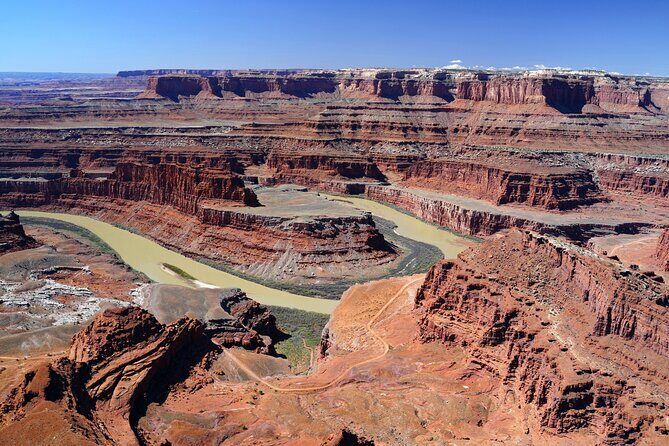
- Must-see stops you’d otherwise miss, from Mesa Arch to Dead Horse Point
- Short walks built into the route, including a one-mile option at the whale-shaped rock
- A biology-minded reminder to stay on roads and trails because desert soil is alive
Why Canyonlands Island in the Sky fits a driving audio tour
Canyonlands can feel big and confusing when you’re just following your instincts. Island in the Sky is one of the easier places to “get it” from your car because the overlooks are concentrated. This tour uses that advantage well: you get a logical order of viewpoints and a story for each one, without needing to study a map like it’s your job.
The audio format also helps your brain. Instead of bouncing between signs and guessing what you’re looking at, you get clear context: how the park’s layers formed, what the river carved, and why certain names stick around. You stay in control. If you want to linger at one overlook, you do. If you’re not in the mood for a short walk that day, you skip it.
Other Canyonlands National Park tours we've reviewed in Moab

Route basics: 62+ miles, 37+ audio stories, and real-world timing

The full driving portion is listed as about 62 miles with more than 37 audio stories, and it’s estimated at 1–2 hours to complete. That’s the “drive-through” time if you keep stops quick. If you do every short walk option (and actually take photos instead of just snapping and moving), I’d budget more time.
A practical note: the app is designed to match your position on the route. So if you park far from the intended spot, turn around, or skip ahead too aggressively, you can throw the narration off.
Here’s what you’ll want to do before you roll:
- Get your phone charged and ready for offline use
- Download the tour while you still have strong wifi/cellular
- Set up sound in your car (more on that below)
Getting started at Moab Giants Cafe: download first, then press play
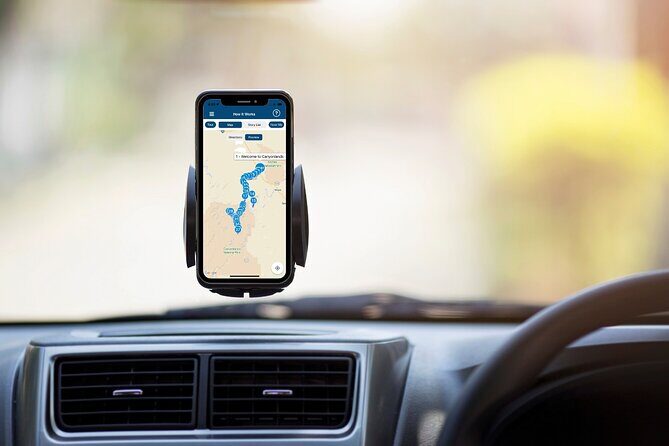
Your start point is Moab Giants Cafe (112 UT-313). No guide meets you there. You’ll open the Action app, enter the password you receive by email/text, and start from the first story point so the audio begins automatically.
The most important logistics trick is not exciting, but it matters: download the tour while you have strong signal. Canyonlands is remote, so plan for a phone that stays usable without service. The app is meant to work offline after download, and that’s the whole point.
If you want your driving comfort level high, connect your phone to your car stereo via Bluetooth, USB, or AUX. The tour audio is also compatible with Apple CarPlay. For stop-and-walk moments, headphones can help keep the experience clear while you’re away from the car.
Stop-by-stop on the White Rim drive: the highlights you can’t wing
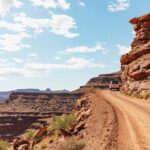
White Rim is the long route portion of the tour, and it’s where the park’s variety shows up fast. Along the way you’ll hear big-picture stories, plus small details that make you look twice at what you’re seeing.
White Rim and the living desert soil reminder
The tour calls out an important rule for Canyonlands: don’t wander off the beaten paths. There’s something called biological soil crust, and it’s easy to damage when you step where you shouldn’t. Even if the rock looks tough, that top layer isn’t “just dirt.”
If you want to take photos, do it from the roadway pullouts and designated short trails. Your best pictures will still look great, and you’ll avoid the slow regret of seeing someone else’s footprints where they don’t belong.
Other self-guided audio tours we've reviewed in Moab

Cataract Canyon and the Colorado River story
Early on, you’ll get a sense of scale at Cataract Canyon, a long stretch of the Colorado River system in the broader park region. The narration helps connect what you see (rock walls, river work, canyon depth) to what the river has been doing for ages.
It’s one of those places where your eyes want to zoom in on the nearest cliff face, but the audio nudges you to also think about the whole system.
Green River Overlook: Utah’s biggest river, explained
At the Green River Overlook, you’re set up for views of Canyonlands’ Island in the Sky and the Green River continuing its work on the canyon walls. The audio also connects the name to green soapstone found along the banks. It’s the kind of detail that makes a normal-looking view feel more personal.
This is also one of those spots where you can pull over, step out, and let the “soundtrack” guide your looking. The overlook benefits from a slow scan left-to-right.
Visitor Center stop: supplies, water, and sanity
The tour routes you to a Visitor Center ahead. This is a smart break in a park that doesn’t offer much in the way of infrastructure. If you’re anything like me, you’ll drink more water once you’ve been out under the sun for a while.
Use this stop for basics: bathroom, water refill, and grabbing anything you forgot before the drive got serious.
Corona Arch and the arch-spotting game
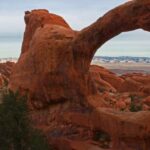
Next you’ll hit Corona Arch, a natural sandstone arch near Moab. The audio frames it in relation to nearby arches in the same rock formation, which helps you understand why this whole area is a playground for orange-rock geometry.
If you like quick wins, this stop works well: you don’t need a big commitment to feel like you saw something iconic.
The three-sided overlook: breathtaking, and not for everyone
One of the overlooks in the route gives views from three sides, and the tour calls out a key consideration: if heights make you nervous, there’s nothing between you and the drop. The view is the point here, so if you have height anxiety, keep your expectations realistic and use it like a quick look rather than a long stare-down.
If you do stop, take your photos, keep your balance, and move on. That’s a better strategy than forcing comfort.
Plateau Viewpoint: views plus a practical bathroom
The Plateau Viewpoint turnoff is worth it because it pairs scenery with logistics. There’s a pull-over area for photos, plus a handicap accessible toilet and an information panel discussing anthropological work in the area.
This is the kind of stop that makes a driving tour feel civilized. You’re not just trading time for views; you’re also getting real-world facilities.
Dead Horse Point: a name with a story
Then you arrive at Dead Horse Point. The audio leans into the local legend: mustangs were reportedly corralled in the early 1800s, broken for use, and the undesirables were released. It’s a stark story for a view that feels strangely calm.
I like stops like this because they explain why the place carries a name instead of just listing a viewpoint and moving on.
Sevenmile Canyon, Merrimac, and Monitor: rock shapes with personality
As you drive near Sevenmile Canyon, the narration mentions the canyon floor feeling close and constricted, then the view opening to the right toward Merrimac and Monitor. The names make the rock formations easier to remember, and the audio helps you spot them when your eyes might otherwise miss them.
If you’re driving and want good photos, keep an eye on pullouts and don’t wait until the last second. Some turns don’t leave much room to park safely.
Murphy Point Overlook: easy trail, strong payback
You’ll get a chance to do Murphy Point Overlook, with an easy trail listed at about 3.5 miles roundtrip. The narration says the hike doesn’t offer tons of scenery, but the overlook view at the end is the reward: Stillwater Canyon and the Green River.
So think of this walk as a “show up for the viewpoint” type of trek, not a scenic stroll. If you want a lighter hike day, you can treat it as optional.
Big Mesa Viewpoint: scale you feel in your ribs
The Big Mesa Viewpoint is where the route starts to feel like a geology theme park. The audio describes the mesa as if it was placed there by accident and forgotten. That’s exactly the feeling you get looking out across it.
Short stop, big wow. It’s a good place to stretch your legs without committing to a longer hike.
Native granaries: hundreds of years of planning
There’s a stop in the route focused on granaries left by Native peoples, described as visible from the base of the last hill if you keep your eyes open. Because they’re old and meaningful, the audio emphasizes being careful when approaching.
This is one of those moments where you stop taking the view for granted and realize people built strategies into this terrain long before modern roads.
The whale-shaped rock and Upheaval Dome views
One of the most fun stops on the drive is the “perhaps the world’s largest whale” moment. The tour points out that the whale’s head is on the left, and then notes an easy one-mile hike along the back that leads to spectacular views of Upheaval Dome.
This is the kind of walk that’s short enough to fit into a driving itinerary but still feels like you left the car and earned your view. If you like quirky landmark names, you’ll probably love this one.
Mesa Arch: the classic stop you should not skip
Then comes Mesa Arch, a must-do. The tour describes a short walk from the parking area to the arch and reminds you to notice the surrounding juniper and pinyon trees.
Mesa Arch is one of those places where the audio makes you look smarter: you understand what you’re seeing instead of just photographing it.
Candlestick Tower: layered rock like a cake
The route includes Candlestick Tower, described as resembling layered rock like a layered birthday cake, with white on bottom, reddish-brown in the middle, and red on top.
When you hear that description right as you’re facing the tower, it becomes much easier to spot the layering yourself instead of taking the view at face value.
The Colorado River overlook area: small, but useful
The narration also highlights a stop with a Colorado River overlook and a cafe to reenergize, along with limited seating (only eight tables are noted). This is the kind of stop you’ll appreciate because it supports your day instead of just adding another viewpoint.
If you’re hungry, treat this as your timing checkpoint. Eat before the drive gets long again.
Buck Canyon and La Sal mountains: a more accessible viewpoint
Another strong stop offers views of Buck Canyon and the La Sal mountains, with a short paved trail and a rail between you and the canyon. The audio also notes this makes the stop a good fit if heights are a concern.
The rail matters. It turns a “stop at the edge” moment into something you can enjoy without white-knuckle focus.
Orange Cliffs and the Under the Ledge name
The audio picks up cowboy history again with a name for a section of the cliffs: Under the Ledge. It’s explained as a distinct area that seemed to sit underneath a huge rocky ledge.
These details are why I like audio tours in parks like this. Names aren’t random. They’re part of how people navigated and understood the place.
Layered rock reminder as the tour wraps up
Near the end, the tour circles back to the park’s signature feature: the rock layers. It explains that in most of the park, the layers haven’t been disrupted since their formation, and what you see is what was deposited long ago.
That final “how to read the rocks” wrap-up is useful. It makes your last look feel like a conclusion instead of a stop-and-go ending.
The Neck connector: a short stop with a big explanation
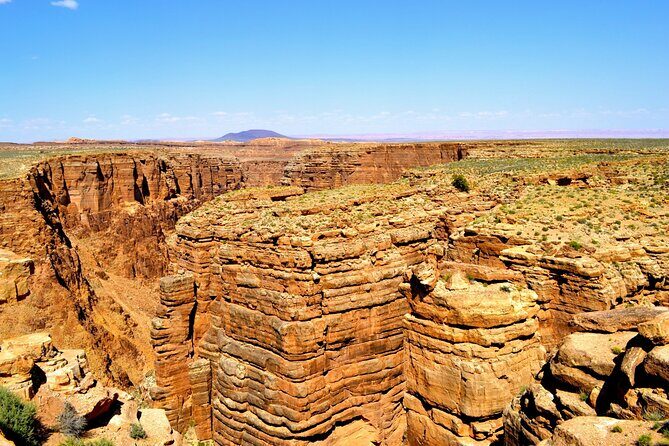
After White Rim, the tour includes The Neck, a shorter segment described as a strip of land connecting Island in the Sky to other mesas, like a natural bridge. The narration keeps the explanation simple and quick, and that fits the length too.
It’s a good palate cleanser after longer canyon driving. You’re back to “why this looks like this” mode, just for a few minutes.
Price and value: $16.99 per group can beat a guided day

At $16.99 per group (up to 4), this is priced like a small, sensible add-on for Canyonlands. The biggest value is that you’re paying once per car instead of paying per person like a bus or guided day can turn into.
The one catch: the park’s entry permit is required and is not included. So your true cost is tour price plus the Canyonlands admission you need to get in.
If you already know you’ll do multiple overlooks, a short walk, and want context without hiring a human guide, this format makes a lot of sense.
Practical tips that make the audio tour actually work
This tour is built for your car, but the details matter.
First, download while you have signal. The tour explicitly warns that you must download on strong wifi/cellular, then it works offline afterward. If you wait until you’re already stuck with no service, you can end up in a frustrating situation.
Second, start at the correct first point. One of the recurring annoyances with location-based narration is getting out of sync if you start from the wrong place or move too far off route. So take two minutes to park correctly at the beginning and start the first story.
Third, drive at a pace that matches the narration. The tour encourages you to follow the route and speed limit. In some spots, the posted speed limit can feel fast for audio timing, and it’s easier to keep the audio aligned if you drive a touch slower.
Finally, bring water and snacks. The tour’s own pacing assumes you’ll need to refuel. Canyonlands doesn’t give you much in the way of infrastructure outside of the obvious stop areas.
Who this self-guided drive is best for
This is a strong fit if you want:
- Independence: drive when you want, linger when you want
- A guided-feeling experience without paying for a person to sit beside you
- Family-friendly structure with optional short walks that don’t require a full hiking day
- First-time park learning that doesn’t require research before you arrive
It’s less ideal if you:
- Don’t want to manage your phone audio setup
- Prefer a ranger-led explanation with Q&A
- Plan to do lots of off-trail wandering (the audio’s soil-crust reminders are a sign not to)
Should you book Canyonlands with this audio tour?
If you’re doing Island in the Sky and you want more out of the viewpoints than just seeing them, I’d book it. The offline-ready, location-triggered narration is the right match for a park where cell service is unreliable and where the best views are spread out.
I’d skip or reconsider only if you know you’ll struggle with downloading ahead of time or you don’t want to stick closely to the intended route order. Get set up right, and this tour turns Canyonlands from a drive into a story you can actually follow.
FAQ
How long does the Canyonlands self-guided driving audio tour take?
It’s estimated at about 1 to 2 hours to complete, and the route is listed as over 62 miles long.
What does the tour cost?
It’s $16.99 per group, up to 4 people.
Do I need internet or cell service to use it in the park?
You must download the tour while you have strong wifi/cellular. After that download, it works offline.
Do I need to buy Canyonlands entry tickets separately?
Yes. An entrance permit is required to visit Canyonlands National Park, and it is not included with this tour.
Where does the tour start and where does it end?
The start is Moab Giants Cafe (112 UT-313, Moab). The tour ends at Grand View Point (Moab, UT 84532).
Can I start the tour whenever I want?
You can start at your own pace and begin anytime. The starting location has posted hours (8:00 AM to 5:00 PM daily).
How do I access the tour after booking?
After booking, you’ll receive an email and text with setup instructions and a password. Then you download Action’s Tour Guide App and enter the password in the app.
Does the audio play automatically as I drive?
Yes. You start by entering the first story’s point, and the audio plays automatically based on your location as you follow the route.
How do I connect the audio to my car?
You can connect using Bluetooth, USB, or AUX. The audio is also compatible with Apple CarPlay, and headphones can be helpful when you’re walking.