REVIEW · MOAB
Arches and Canyonlands NP Self-Guided Driving Audio Bundle Tour
Book on Viator →Operated by Travel with Action · Bookable on Viator
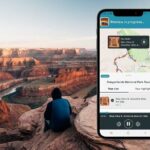
GPS-led audio in Utah red rock? Yes. This bundle turns Arches and Canyonlands into a self-guided driving tour with location-triggered narration, so you get the geology and human stories right when you’re stopped to look. I especially like the offline setup idea for remote parks, plus the fact that you can go at your own pace instead of timing yourself to a bus.
My second favorite part is the value: it’s priced per group (up to 4), and you keep lifetime access with no expiry. The only real drawback to keep in mind is that the tour depends on you downloading and setting it up well before you lose signal, and a few playback glitches have been reported when people didn’t follow that process or when phones faced connectivity hiccups.
In This Review
- Key things to know before you go
- What You’re Actually Buying: One Car, Two Parks, Lifetime Audio
- Offline, GPS, and Audio Setup: How to Make It Work Smoothly
- Timing Your Day: How 7–8 Hours Feels in Real Life
- Arches National Park Entrance Stories: Moab Fault and the La Sal Mountains
- Three Gossips to Panorama Point: Windows, Caves, Dunes, and Stargazing
- Delicate Arch and Devil’s Garden: When Short Walks Pay Off
- Canyonlands Arrival: Sevenmile Canyon to Merrimac and Monitor
- White Rim Road and Dead Horse Point: Soil Crusts and Local Legends
- Mesa Arch and the Island in the Sky Overlooks: Native Plants, Visitor Basics, Real Views
- Candlestick Tower to Murphy Point: Candle Colors and an Easy 3.5-Mile Walk
- Price and Value: When $24.99 per Group Really Makes Sense
- Who This Bundle Fits Best (and Who Might Be Happier Elsewhere)
- Should You Book This Self-Guided Audio Bundle?
- FAQ
- How long does the Arches and Canyonlands audio driving bundle take?
- Is the price per person or per car?
- Does it work offline in the parks?
- Do I need to buy park admission separately?
- How does the audio know when to play the next story?
- How do I start once I arrive?
- Can I cancel for a full refund?
Key things to know before you go

- Lifetime access, no expiry: download once in good signal, then use it on future trips.
- GPS-triggered, hands-free audio: stories play based on where you are, so you’re not tapping constantly.
- Offline maps for remote areas: no cell coverage needed after the download.
- Self-paced driving plus short walks: you’ll do quick hikes at key overlooks without committing to a big guided schedule.
- Great for mixed mobility: you can enjoy the audio from the car while others walk short distances.
- Low cost per car: better value than bus tours when you have up to four people in one vehicle.
What You’re Actually Buying: One Car, Two Parks, Lifetime Audio

This is sold as a bundle for Arches and Canyonlands, built to be done from your car with optional short walks at the stops that matter most. The pricing is simple: $24.99 per group up to 4. That’s the kind of deal that works in real life, because one car can carry a family or two couples and split the cost.
The real “why” behind the price is the lifetime access. The app is described as new, lifetime access with no expiry, so you’re not paying again next season or next year. If you’re the type who returns to places once the photos and memories fade a bit, this can turn into a second-use bargain.
Timing is also workable. The bundle is listed at about 7 to 8 hours, but the audio routes for each park are designed to take roughly 2 to 3 hours per park if you treat the day like a driving tour and keep the walks short. In other words: you can do the highlights without locking yourself into an all-day hike.
One practical consideration: the tour doesn’t include park entry. You’ll still need to handle Arches and Canyonlands admission on the parks’ official channels. Think of this like an excellent guide that tells you where to go and what you’re seeing, not a ticket that gets you inside.
Other Arches National Park tours we've reviewed in Moab

Offline, GPS, and Audio Setup: How to Make It Work Smoothly
If there’s one thing to get right, it’s the setup. The tour is built to work offline after download, but it also explicitly requires you to download it while you’re in strong wifi/cellular. Then, once you’re in the parks, you’re relying on the downloaded audio and offline maps.
Here’s the workflow in plain terms:
- After booking, you receive instructions with a password by email and text.
- You download the Action’s tour app (the tour audio package lives inside that app).
- On-site, you open the app, choose the correct tour version based on your starting point and direction, and then follow audio cues.
For audio, you can listen while driving by connecting your phone to your car stereo via Bluetooth, USB, or AUX. For walking bits, headphones can be a better move. Audio playback is described as compatible with Apple CarPlay, and support for Android Auto is noted as on the way.
Also worth knowing: playback is designed to be location-based, meaning you’re not stuck guessing which story comes next. If you’re quick to pull over and look, it fits like a personal guide. If you do things out of order, the app may still keep you oriented through GPS tracking, but you’ll have the smoothest time if you stick near the planned route and speed.
Timing Your Day: How 7–8 Hours Feels in Real Life

This bundle can stretch into a long day, but it’s flexible. The shortest stop times in the route descriptions are often around 10 minutes per key viewpoint, with a few stops tied to quick walks.
What that means for you: you’re not spending hours trekking every time you stop. Instead, you’re doing a series of short “look, learn, snap photos, move on” moments. The bigger time hits tend to be the famous arches and a couple of overlooks where you’ll probably want to linger for the view.
In practice, plan your day around three things:
- Parking and walking time at the iconic points (like Delicate Arch).
- Heat and water. The tour itself warns that Arches and Canyonlands don’t have much infrastructure, and dehydration is a real risk.
- Your comfort with short hikes. You’ll see notes that some walks are easy or brief, but they’re still walks.
If you want a smooth day, I’d treat this like: drive → quick stop walk → back in the car → next story. If you want to slow down, you can. The app is built so you can start anytime and pause anywhere, which is perfect if someone in your group needs a break or if you want to re-hear a segment.
Arches National Park Entrance Stories: Moab Fault and the La Sal Mountains

The Arches part begins near the park entrance and visitor center, right where you can get your bearings fast and decide where to spend your first energy. From the start, the narration frames the place as more than pretty rock.
One of the first things I like is the way you’re taught to look for the “why” behind the shapes. You start with Moab’s Fault, a crack in the earth’s crust tied to millions of years of geologic pressure. It helps you understand that Arches is not random decoration. It’s structure plus time plus stress.
Then you get the La Sal Mountains story—Utah’s second-highest mountain range—and a note about Spanish settlers and how they pushed out the Ute and Paiute tribes. That historical layer matters because it turns Arches from a scenery stop into a human-place stop. You’ll still get the views, but you’ll also know what changed when people arrived and tried to live here.
Three Gossips to Panorama Point: Windows, Caves, Dunes, and Stargazing

As you drive, you hit the Arches rhythm: pull over, look up, listen, then keep rolling.
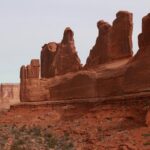
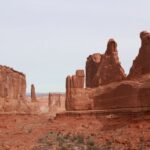
You’ll pass Three Gossips, then reach a vista area where you can see features like the Organ, Courthouse, and Sheep Rock. The narration also points you toward places that help you practice seeing arches as part of a bigger system, not just a single postcard.
A few stops later come the big-name formations:
- Windows Road and the Windows: classic erosion shapes you’ll want to stop for.
- Cove of Caves: a view into a pocket where arches and almost-arches cluster together.
- Panorama Point: a viewpoint that the tour specifically flags for stargazing later. The point here isn’t just the night-sky claim; it’s the reminder that Arches is far from city light pollution, so the sky can change your whole relationship to the place.
The stargazing angle even includes a note about how the Paiute are tied into that way of looking. That’s a subtle but meaningful touch: you’re not only told what you’re seeing, you’re nudged to consider how people in this region interpreted the sky.
Also, expect the audio to reference myths and the harsh reality of the terrain. If you’re curious about how Indigenous stories and geology talk to each other, Arches is a great place for that kind of listening.
Other Canyonlands National Park tours we've reviewed in Moab

Delicate Arch and Devil’s Garden: When Short Walks Pay Off
This is where the bundle earns its keep.
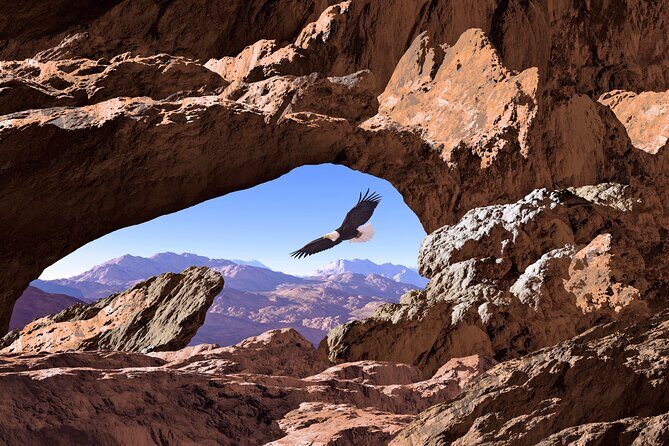
At Delicate Arch, the tour calls it the most famous spot in Arches and suggests a quick hike to get right up to it. Even if you think you’ve seen Delicate Arch before, seeing it in person tends to feel different because the scale and the improbability hit your body, not just your eyes.
Then you move through areas that reward patience:
- Salt Valley is described as quieter, tied to the collapse of sandstone domes. The key is that you’re told to look at the broken pieces left on the ground, so the narration helps you read the “mess” as part of the story.
- You also pass Fiery Furnace, described as a network of narrow canyons and passages amid towering red cliffs. Even without getting lost inside, you’ll come away understanding why this area draws people in.
Finally, the Arches route ends at Devil’s Garden Trailhead, pointing you to a hiking trail that leads toward Landscape Arch and beyond. This is your chance to swap driving-time for walking-time without turning the day into an endurance event.
If you like your parks with a mix of car views and short walks, Arches in this format is a smart match.
Canyonlands Arrival: Sevenmile Canyon to Merrimac and Monitor
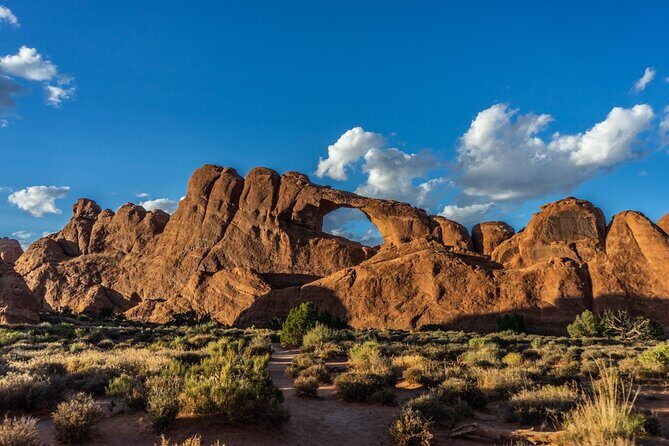
After Arches, Canyonlands feels more open and more stark in a way that matches the driving tour style. You’re still following audio cues, but the scale makes every stop feel like a mini-planet.
The narration takes you from the floor of Sevenmile Canyon, where you’re near tall rock walls, then out to a moment where two distinct features appear in the distance: the Merrimac and the Monitor. The benefit of this approach is that it teaches you how to read distance. Canyonlands can look “empty” if you only look close to your feet. The audio keeps nudging your eyes outward.
Then you get Big Mesa Viewpoint, which the tour frames as a huge mesa that looks almost accidental. That’s a good description to keep in mind, because Canyonlands views often feel like they were placed by something larger than weather.
White Rim Road and Dead Horse Point: Soil Crusts and Local Legends

This is the part of the Canyonlands drive where I pay attention to the “how” of visiting, not just the “what.”
The tour calls out White Rim Road and includes a warning about going off the path. The key detail is biological soil crust, described as alive and fragile. You don’t need a science degree to understand the practical meaning: stay on roads and established areas. Your curiosity isn’t worth the damage.
Then comes Dead Horse Point with a local legend about wild mustangs being corralled in the early 1800s. It’s a reminder that names here are tied to real ranching stories and also to how communities interpret what they see.
Mesa Arch and the Island in the Sky Overlooks: Native Plants, Visitor Basics, Real Views
At Canyonlands, you’ll often be on the edge of big drop-offs. The audio doesn’t shy away from that. It even gives practical framing, like what kind of view you’re walking toward and how heights might feel.
Before some of the signature viewpoints, the tour points you to the visitor center for supplies, bathroom access, and refilling water bottles. That’s not fluff. In a park with limited infrastructure, water planning affects how much you enjoy the day.
Then you hit Mesa Arch, described as a must-do. The trail is short, and you’re encouraged to watch the juniper and pinyon trees around you. That matters because it teaches you to notice living details, not only the rock.
From there, you move through classic Island in the Sky views like:
- Green River Overlook, where you can see the Green River at work on the canyon walls. The narration adds that the Green River is the largest stream in Utah at 730 miles, and links the name to green soapstone found along its banks.
- Granaries left by Native peoples, visible from the base of the last hill. The tour’s tone here is careful: these granaries are hundreds of years old, so approach with respect and caution.
You also get geology made visual. The audio reminds you how layers usually stay intact in most places in the park, so what you see reflects the deposit history from long ago.
Candlestick Tower to Murphy Point: Candle Colors and an Easy 3.5-Mile Walk
A signature moment comes with Candlestick Tower, described like a layered birthday cake topped with candles. The narration even assigns the colors: the bottom layer is white, the middle is reddish-brown, and the top is red. When audio gives you that color map, your photos improve because you know what you’re trying to capture.
Next is Murphy Point Overlook, described as an easy hike with a total of 3.5 miles roundtrip. Even if the hike itself doesn’t get labeled as dramatic, the payoff is the view of Stillwater Canyon and the Green River. The tour also notes a rail between you and the canyon floor area, making it a better pick if you’re nervous about heights.
If you like to end hikes without feeling wiped out, this is one of the more forgiving choices in the route.
The bundle also includes a rest moment where there are only eight tables, so it’s a good stop to plan for if you want to grab a quick meal without turning lunch into an extra scavenger hunt for a seat.
Price and Value: When $24.99 per Group Really Makes Sense
Here’s where I think this bundle shines: it competes well with guided buses because it’s per car. If you’ve got four people in one vehicle, the price per person drops quickly. That matters in Utah, where the “guided” alternative often adds real cost on top of park entry.
You’re also getting something buses often can’t deliver: the freedom to repeat what you missed and pause when you want. The app is built so you can repeat sections when you want to hear something again, and you can skip parts that don’t grab you. That keeps your day from turning into forced pacing.
One more value point: the tour includes more than 49 audio stories per tour and the overall driving route is listed at 28+ miles. That’s plenty of narration to make the car time feel useful, not wasted.
Who This Bundle Fits Best (and Who Might Be Happier Elsewhere)
I think this works best for you if:
- You want high-impact highlights with short walks, not a full-on trekking day.
- Your group includes different energy levels, and you want the flexibility for someone to listen from the car.
- You care about context: geology and human history, not just the name of a rock.
- You can handle doing a one-time download before the parks kill your signal.
It may be less satisfying if:
- You rely on streaming audio or you tend to procrastinate setup until you’re already off the trail of good signal.
- Your group needs nonstop perfect audio with no chance of interruptions. A few issues like audio cutting out offline or segments ending early have been reported, so bring patience and consider carrying backup listening options.
- You tend to change directions a lot. GPS-based playback works best when you follow the route logic and don’t zigzag repeatedly.
Should You Book This Self-Guided Audio Bundle?
I’d book it if you want an easy way to see Arches and Canyonlands in one go, and you like the idea of a guide that gives you the “what and why” right when you’re looking. The offline access plus lifetime use are strong reasons, especially if you might return later.
I’d hesitate if you know you won’t be able to download properly beforehand, or if your phone setup is unreliable when offline. Get the tech piece right, and this becomes a smart, low-stress way to make the parks feel bigger and more understandable.
FAQ
How long does the Arches and Canyonlands audio driving bundle take?
It’s listed at about 7 to 8 hours total, and the tour routes are designed to be completed in roughly 2 to 3 hours per park if you keep to the driving-and-short-walk format.
Is the price per person or per car?
It’s $24.99 per group up to 4, so it’s priced per group rather than per person.
Does it work offline in the parks?
Yes. You’re prompted to download the tour while you’re in strong wifi/cellular, and then it works offline after download, including offline maps.
Do I need to buy park admission separately?
Yes. The tour includes the audio and route guidance, but attraction passes, entry tickets, or reservations are not included, so you’ll need to handle Arches and Canyonlands admission on the parks’ official websites.
How does the audio know when to play the next story?
The tour uses location-based cues. Audio stories play on their own based on your location, with a hands-free experience as you drive and pull over.
How do I start once I arrive?
Go to the starting point, open the Action audio tour app once you’re onsite, and launch the version that matches your planned starting point and direction. The first story begins automatically at its cue.
Can I cancel for a full refund?
You can cancel up to 24 hours in advance for a full refund.