REVIEW · MOAB
Canyonlands National Park Self-Guided Audio Tour
Book on Viator →Operated by Shaka Guide Apps · Bookable on Viator
Canyonlands rewards a slow drive. This self-guided GPS audio tour turns the Island in the Sky district into an easy, stop-anytime route with offline guidance and stories as you roll. You’ll hit big viewpoints, quick walks, and a couple of serious hiking options without paying for a full-day guide.
I especially like how the app is group-priced per vehicle (up to 15 people), so your cost drops fast if you’re traveling with family or friends. I also love the smart pacing: you can spend more time at the stops that pull you in, then skip the ones that don’t.
The main thing to watch is setup: this is built to work offline after you download, so if you show up without downloading first, you may be stuck. Plan for that, then you’ll have a smooth day.
In This Review
- Key Highlights to Know Before You Start
- Canyonlands by Car Works Best With a Self-Guided Audio Plan
- Before You Go: Download Offline, Pay Park Fees, and Think About Timing
- Island in the Sky Visitor Center: Your First Big Views and Your Best Planning Stop
- Monitor and Merrimac, Navajo Rocks, Dead Horse Point: Fast Stops That Add Meaning
- Shafer Canyon Overlook and Mesa Arch: Two Places Where Timing Changes Everything
- Iconic Formations and Layered Canyon Views: Candlestick Tower Through Grand View Point
- River-Carved Power: Green River Overlook and What It Means for the Park
- Aztec Butte, Whale Rock, and Upheaval Dome: Choose Your Effort Level
- Moses and Zeus Rock Towers: The Tough Finish Option
- Value Check: Is This $12.79 Audio Tour Worth It?
- Should You Book This Canyonlands Audio Tour?
- FAQ
- What does the Canyonlands National Park GPS audio tour cost?
- How long is the tour?
- Where does the tour start?
- Is the tour offered in English?
- Do I need Wi‑Fi during the tour?
- Are park entry fees included?
- Can I skip stops or choose my own route?
- Is this a guided group tour with other people?
Key Highlights to Know Before You Start

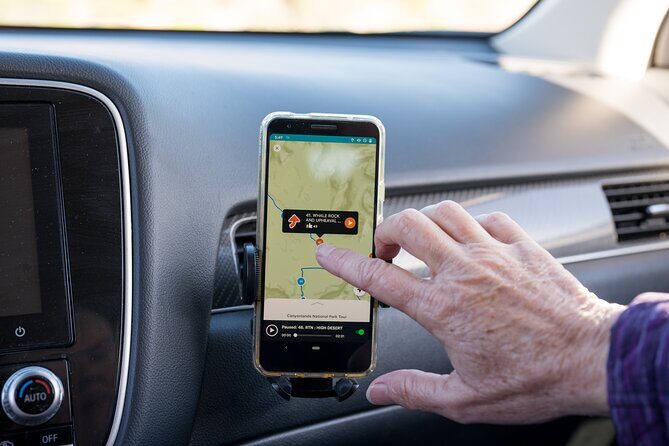
- GPS-activated audio and turn-by-turn directions so you’re not guessing where to park next
- Offline map support (download ahead on solid Wi‑Fi) with no need for constant data
- Island in the Sky route design built around high, dramatic overlooks and short hikes
- Pick-your-own pace: you decide how many stops to do and which trails are worth your time
- Practical stop planning with one key base point for water and toilets at Island in the Sky Visitor Center
Canyonlands by Car Works Best With a Self-Guided Audio Plan
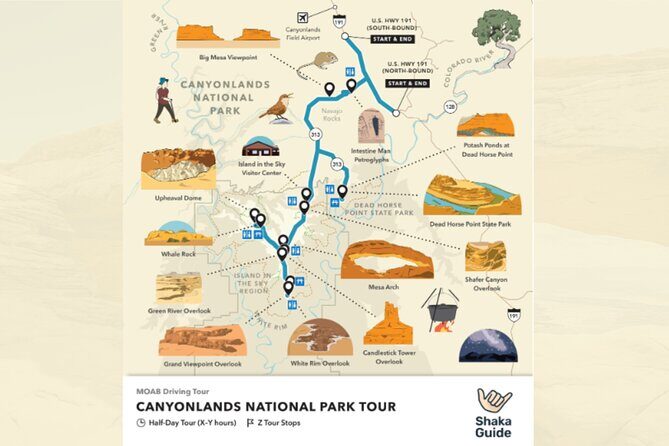
Canyonlands National Park is big. Even in the Island in the Sky district, the distance between stops makes a fixed guided tour feel a bit rigid. This format—mobile ticket + GPS driving directions + audio that cues up as you arrive—fits the way Canyonlands wants to be visited: stop, look, walk 10 minutes or 45, then drive to the next “wait, how is that even real?” view.
The cost is also unusual in a good way. It’s $12.79 per group (up to 15), not per person. If you’re splitting the vehicle cost with a couple of people, this can feel like a budget-friendly way to add “guide-level” context to your day.
One more practical win: the tour can take 6 to 8 hours depending on how many stops you actually do. If you’re a fast mover, you can keep it tight. If you like photos and slow walking, you can stretch it without feeling like you’re breaking a schedule.
Other Canyonlands National Park tours we've reviewed in Moab



Before You Go: Download Offline, Pay Park Fees, and Think About Timing
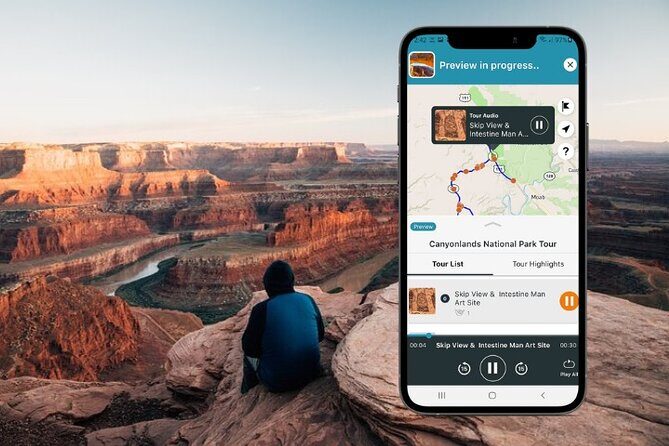
Here’s what you should set up before you leave Moab. You’ll want to download the tour using strong Wi‑Fi before you reach the park, because the big selling point is offline use once it’s loaded. The app is designed to work without ongoing network, but you still need that initial download step.
Also, build your day around park logistics:
- Admission isn’t included, so you’ll need to pay your Canyonlands entrance fee. The tour’s main service stop is the Island in the Sky Visitor Center, where you can also talk with a ranger and visit the bookstore.
- That same Visitor Center is the only place in the district listed here for potable water and flushing toilets. If bathrooms matter to you (they do), make the Visitor Center your first priority.
- Mesa Arch is a sunrise magnet. The parking lot starts filling while it’s still dark. If you want that calm first-light look, start early or plan to do Mesa Arch later if you miss the morning rush.
Finally, bring the right kind of mindset for Canyonlands roads. Some pullouts are straightforward. Some views require you to park and walk. And one stop hints at a bigger decision: the Shafer Trail is mentioned as something you might take only if you have the right vehicle. So, think ahead about what kind of driving you’re comfortable with before you get seduced by that “could we?” feeling.
Island in the Sky Visitor Center: Your First Big Views and Your Best Planning Stop
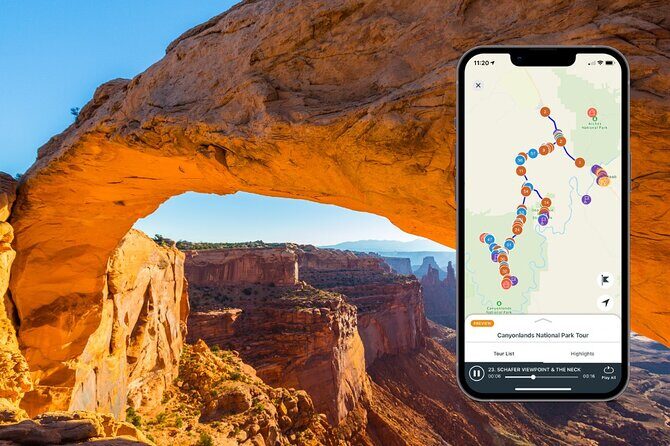
Your tour starts at 112 UT‑313, Moab, UT 84532, and it leads you straight into the Island in the Sky district. Stop 1 is your foundation: you’re sent to the district’s dramatic overlooks with a heavy focus on geology and long-range views stretching for hundreds of miles.
What makes this start valuable is that Island in the Sky is also where you handle the boring-but-important stuff:
- You’ll get a chance to pay your entrance fee
- You can talk to a ranger
- You can use the Visitor Center facilities, including potable water and flushing toilets
This matters because Canyonlands is not the place where you want to guess about where you can refill a bottle or take a bathroom break. If you need a reset, do it here before you commit to the next viewpoints.
Practical drawback: Stop 1 is allocated about 2 hours, so if you’re trying to keep your day short, you might feel pressure to rush. On the flip side, this is the perfect place to begin slowly—get oriented, then the rest of the route makes more sense.
Monitor and Merrimac, Navajo Rocks, Dead Horse Point: Fast Stops That Add Meaning
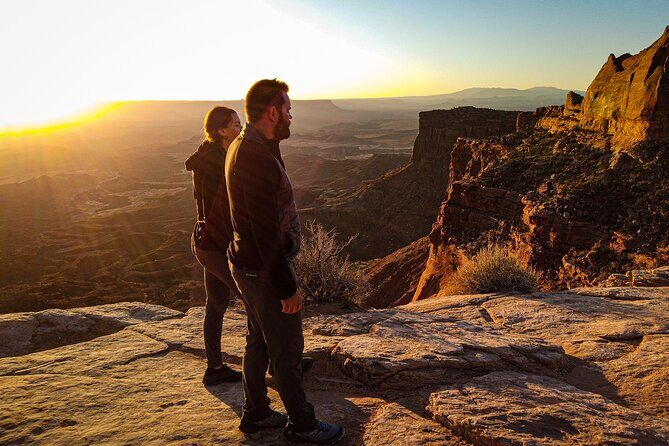
After Island in the Sky, you’ll hit a cluster of quick, high-reward stops.
Monitor and Merriamac Rock Formations (about 20 minutes):
This viewpoint pairs geology with Civil War-era trivia. The two buttes you’ll see—Monitor and Merrimac—were named for their resemblance to the first American ironclad warships. It’s a nice reminder that place names often carry stories far beyond the rocks themselves.
Possible consideration: the audio time here is short, so if you love long photo sessions, plan to add a few minutes of your own when you arrive.
Navajo Rocks Main Parking Lot (about 20 minutes):
This stop is less about a single iconic vista and more about what Canyonlands enables. Mountain biking is popular here, and the tour points you to Navajo Rocks trails that range from smoother flow to technical sections. Even if you’re not biking, it helps you understand why people come to Moab beyond sightseeing.
Dead Horse Point (about 20 minutes):
Dead Horse Point State Park sits off the road and shares the same mesa as Island in the Sky, but the view is described as wholly unique. The tour is also geared toward history—both ancient and more modern—so you’re not just looking at scenery; you’re building a sense of time.
My advice: treat these as “navigation anchors.” They keep you moving, but they’re short enough that you don’t burn half your day between big hikes.
Shafer Canyon Overlook and Mesa Arch: Two Places Where Timing Changes Everything

Now you’re into the stops where Canyonlands really tests your sense of patience—in a good way.
Shafer Canyon Overlook (about 20 minutes):
You’ll look down at the Shafer Trail, described as narrow switchbacks winding down the mountain. The tour even suggests an adventure option: if you have the right kind of vehicle, you might take the Shafer Trail back toward Moab after the tour.
If you’re not sure what that means for your vehicle, don’t improvise at the last second. This is the kind of route choice that depends on ground clearance, comfort, and vehicle type. Use the overlook as a planning moment, not a spur-of-the-moment challenge.
Mesa Arch (about 20 minutes):
Mesa Arch is one of those easy-walk, high-reward moments. The trail is described as about a half-mile round trip over dirt and slickrock, and the key is timing. Sunrise is singled out as the fantastic moment for views and for the arch itself. The parking lot fills up while it’s still dark.
Here’s the practical move the tour points you toward: get started early to secure parking. If you miss it in the morning, you can try again later—stop by in the afternoon after you complete the rest of the tour.
Other self-guided audio tours we've reviewed in Moab




Iconic Formations and Layered Canyon Views: Candlestick Tower Through Grand View Point

From here the tour leans into “icon” country—famous shapes, big canyon layers, and short walks that deliver a lot for your time.
Candlestick Tower Overlook (about 20 minutes):
The “candlestick” name comes from its shape, like a melting candlestick. The tower is listed as about 450 feet and is also a popular rock climbing spot. If you visit during fall or winter, the tour suggests you might spot climbers.
Practical note: even if you don’t see climbers, this is still a strong visual stop because the form is so distinctive.
Buck Canyon Overlook (about 20 minutes):
This is another layer-and-depth view. The emphasis is on the canyon’s geological layers up close, plus distant mountains. It’s a good contrast stop after the tower—more canyon texture, less single-structure focus.
White Rim Overlook Trail (about 20 minutes, with optional hike):
You get two options here:
- a relatively flat 1.8-mile round trip hike for a stunning 360-degree view
- or a shorter walk from the parking area if you want the overlook without the full loop
This stop is ideal if you want one “stretch your legs” block without committing to a long hike.
Orange Cliffs Overlook (about 20 minutes):
Here you’ll be able to see the orange cliff section of Glen Canyon recreational area, and you may also see the Maze district, described as the most remote part of the park. It’s the kind of view that makes you feel how far the park stretches beyond the main roads.
Grand View Point Overlook (about 20 minutes):
You’ll look down on a complex network of canyons carved by the Colorado and Green rivers. The tour also offers a possible hike option: a two-mile round trip to the tip of the Island in the Sky mesa. The note here is that this is one of the best hikes in the entire park (so if you have the energy, seriously consider it).
Possible consideration: if you already did Mesa Arch at sunrise and a longer hike earlier, this is where fatigue can creep in. Don’t force yourself—do the overlook if that’s all your body wants today.
River-Carved Power: Green River Overlook and What It Means for the Park
Green River Overlook (about 20 minutes):
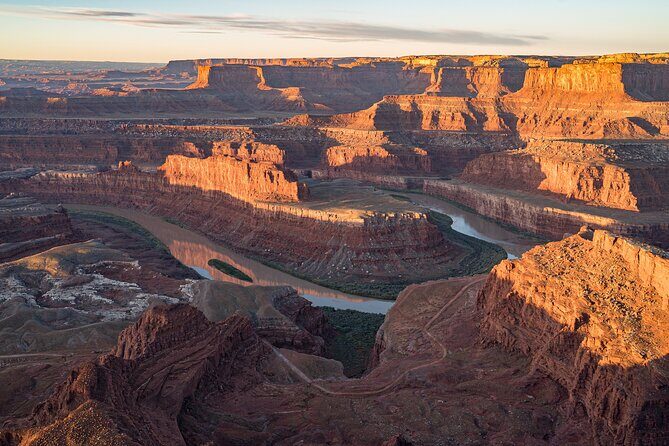
This stop frames the park as a long story of erosion. You’ll see the canyon over 1,000 feet below the road, carved by the Green River. The tour also notes the river’s origin in Wyoming on the left side of the continental divide.
I like this stop because it turns “pretty view” into “process.” The layers aren’t random; they’re the record of where water and time have worked.
After this, you’re ready for the hike options.
Aztec Butte, Whale Rock, and Upheaval Dome: Choose Your Effort Level
This part of the route lets you match the day to your fitness.
Aztec Butte Trail (about 1 hour):
This is a 1.7-mile round trip hike that leads to ancestral Puebloan stone granary structures. The granary was built roughly 800 years ago, around 1200 AD, and the combination of ruins plus wide views is what makes this stand out.
Practical advice: this is a real hike time block (not just a 20-minute stop), so plan to take it seriously—water, shoes with grip, and a pace you can sustain.
Whale Rock (about 20 minutes):
The name comes from a resemblance to a blue whale, which is something you may have to look for rather than immediately see. The tour describes a one-mile round trip hike rated easy to moderate, with great views at the top.
This is a nice option if you want a shorter trail with a payoff, especially if you’re avoiding the longer climbs.
Upheaval Dome (about 20 minutes with two explore options):
Upheaval Dome is described as one of Canyonlands biggest mysteries, with several nicknames including Utah’s Belly Button. You’re given two exploration paths:
- a 1-mile round trip trail to the overlooks (the tour’s recommendation)
- or an 8-mile trail that wraps around the ridge of the crater, described as challenging and where most rescues happen
This is where I’d be strict with yourself. If you’re unsure of conditions, energy, or navigation, take the 1-mile option. The longer loop is for experienced hikers who want a serious day.
Moses and Zeus Rock Towers: The Tough Finish Option
At the end of the itinerary you’re offered a final hike option: a rough 12-mile round trip with a steep descent into the canyon. There you’ll find two 500-foot rock towers named Moses and Zeus.
Since the tour labels this as rough and describes the steep descent, treat it as a “committed hike” day. Don’t plan this if you’ve already run your legs hard. If you do, start early, move steadily, and expect that “rough” can mean more than just steep—it can mean slower progress, more careful footing, and more time than you think.
Value Check: Is This $12.79 Audio Tour Worth It?
For many people, yes—because Canyonlands rewards context. You can drive the roads and see the rocks. The audio adds the why behind the what: names like Monitor and Merrimac, how river carving shaped the terrain, what to notice at Mesa Arch and Upheaval Dome, and why certain views feel different from one mesa to the next.
The best value angle is the pricing model:
- One tour per vehicle/group (up to 15)
- you’re not paying per person to get the “guided” portion
So if your group is 3–10 people, it often feels like you’re buying the audio equivalent of a guide, then getting the freedom of self-guided pacing.
The main reason it wouldn’t feel worth it is if you’re not likely to take short walks and look closely. This tour works best when you’re willing to park, walk, and let each stop do its job.
Should You Book This Canyonlands Audio Tour?
Book it if you want:
- flexibility (you choose which stops to do)
- offline-ready guidance once you’ve downloaded it
- a low-cost way to get stories and context across the Island in the Sky district
Skip or reconsider if you:
- can’t reliably download the app before you lose Wi‑Fi/data
- need every minute timed with a strict schedule (because audio + optional hikes always create a little freedom, and freedom can also mean unplanned extra time)
- are not interested in short hikes and viewpoint stops
If you’re visiting Canyonlands from Moab and you want your day to feel guided without feeling locked to a group, this is a strong way to get there—especially if you build your day around the Visitor Center for services and plan Mesa Arch timing from the start.
FAQ
What does the Canyonlands National Park GPS audio tour cost?
It costs $12.79 per group, up to 15 people. Admission fees to the park are not included.
How long is the tour?
The duration is about 6 to 8 hours, depending on how many stops you choose and whether you do the optional hikes.
Where does the tour start?
The tour starts at 112 UT-313, Moab, UT 84532, USA.
Is the tour offered in English?
Yes. The audio tour is offered in English.
Do I need Wi‑Fi during the tour?
You’re meant to download the tour using strong Wi‑Fi first. The tour includes an offline map and is designed to work without ongoing Wi‑Fi or data.
Are park entry fees included?
No. Park entry fees are not included, so you’ll need to pay your Canyonlands entrance fee.
Can I skip stops or choose my own route?
Yes. The tour is designed for freedom to explore at your own pace, and you can pick the stops you want to do.
Is this a guided group tour with other people?
No. This is private for your group, and only your group participates. Service animals are allowed.