REVIEW · MOAB
Rockies to the Red Rocks Train – Moab to Denver – SilverLeaf Plus
Book on Viator →Operated by Rocky Mountaineer · Bookable on Viator
That first view from a train window hits different.
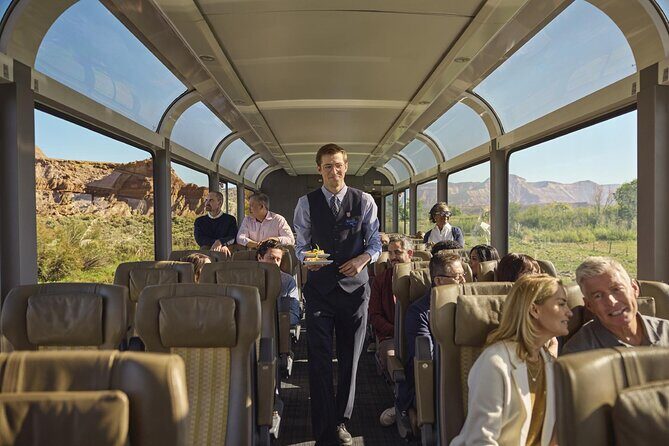
This Rockies to the Red Rocks route is a rare, two-day run where you get canyon walls, desert reds, and hoodoo-style geology—without the stop-and-go of car travel. What really makes it interesting is the SilverLeaf Plus level: lounge-car access, extra space to relax, and premium drinks served right where you’re sitting.
I love two things most. First, the onboard meal and beverage service is genuinely part of the experience, with lunch, dinner, breakfast, plus snacks and drinks brought to your seat. Second, the Hosts guide the ride with practical storytelling about what you’re actually seeing—ghost towns, river canyons, and railroad-era history along the way.
One thing to think about: you may spend time on a motorcoach transfer before the train (and some past riders have said the shuttle leg needs improvement). If you’re the type who hates any “getting there” time, plan for that day-one logistics piece.
In This Review
- Key highlights you’ll feel right away
- What makes this Moab-to-Denver train special
- SilverLeaf Plus: what you’re actually paying for
- Day 1 from Moab: Arches reds, ghost towns, and canyon borders
- Arches National Park (train passes, best seen from the window)
- Thompson Springs and Cisco: ghost town history at moving speed
- Ruby Canyon: the Utah I Colorado marking
- Fruita, dinosaur finds, and Mike the Headless Chicken
- Grand Junction, Palisade peaches, and wine country cliffs
- New Castle: river life and wildlife possibilities
- Dinner and onboard downtime
- Glenwood Springs overnight: why the stop is worth it
- Day 2: Glenwood Canyon to Denver, with canyons you can feel
- Glenwood Canyon: the big wow stretch
- Gore Canyon: tall walls and serious rafting rapids
- Byers Canyon and wildlife chances
- Along the Colorado River: watching history and modern recreation
- Winter Park and the Moffat Tunnel: rail engineering highlights
- Boulder and the Flatirons: where mountains meet plains
- Big 10 Curve: the railroad-friendly grades
- The Denver arrival: RiNo art energy and an easy finish
- What I’d do to get the best experience
- Value check: is $2,327 per person worth it?
- Should you book this Moab to Denver rail trip?
- FAQ
- How long is the Rockies to the Red Rocks train trip from Moab to Denver?
- Where is the overnight stop on this itinerary?
- What meals are included onboard?
- What extra does SilverLeaf Plus include?
- Is WiFi available on board?
- How many travelers are in the group?
- How does luggage handling work?
- Where does the trip start and where does it end?
- What happens if it’s canceled due to poor weather?
Key highlights you’ll feel right away
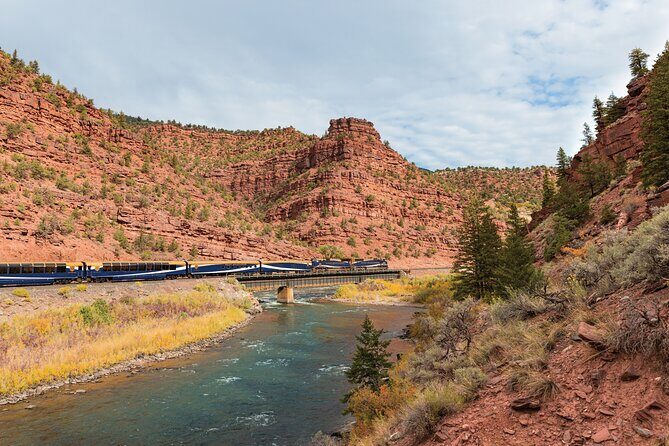
- SilverLeaf Plus lounge access plus a small outdoor viewing area for extra window time
- Day 1’s big sweep of Arches-area reds and canyon country—seen best from rail, not roads
- Overnight Glenwood Springs gives you a real break instead of bouncing straight through
- Hot breakfast and onboard service keep you comfortable while the scenery does the work
- A route packed with “how did they build this?” moments like the Moffat Tunnel and Big 10 Curve
- Small-group feel (maximum 15 travelers) helps the whole trip stay calm and personal
What makes this Moab-to-Denver train special
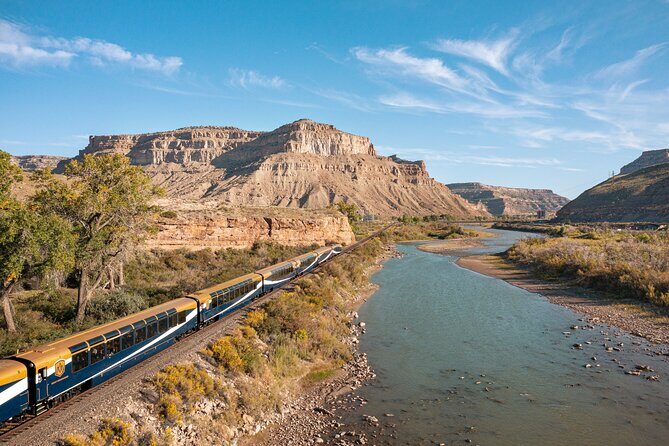
Driving this region means constantly choosing between viewpoints, traffic, and parking. On this train, you keep your eyes up and your schedule simple. You’re carried east through Utah and western Colorado where the best “wow” moments are often in spots roads just can’t reach.
I also like the rhythm of this itinerary. You get a full day of riding on Day 1, then you slow down with a hotel stay in Glenwood Springs, and then you finish with another long scenic day into Denver. It’s a smart way to see more and feel less rushed.
And the SilverLeaf Plus touch matters. A lounge car with additional room means you can switch from seat-time to social-time without feeling like you’re stuck in one place the whole day. Add signature cocktails and premium alcoholic beverages, and the vibe turns into a real viewing experience rather than just transportation.
If you're still narrowing it down, here are other tours in Moab we've reviewed.
SilverLeaf Plus: what you’re actually paying for
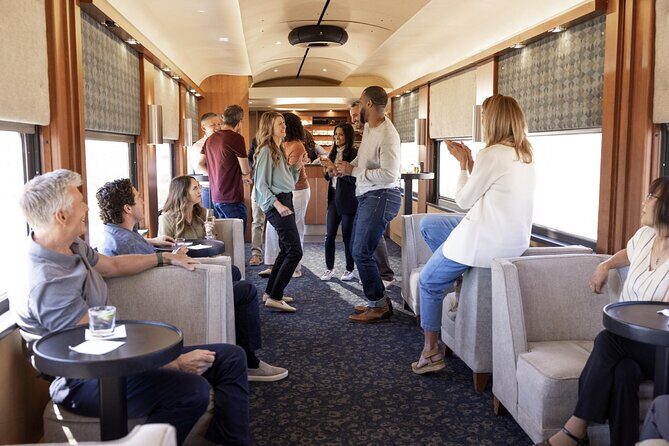
This isn’t just “better seats.” SilverLeaf Plus is designed to make the day feel lighter.
Here’s what you should expect from this upgraded level:
- Access to the lounge car, which gives you extra space to stretch out
- A small outdoor viewing area, so you can get that extra crisp look when you want it
- Premium alcoholic beverages and signature cocktails included as part of the experience
- Still the same core Rocky Mountaineer idea: meals and drinks brought to your seat, plus Hosts onboard
Some riders have also praised how comfortable the lounge setup felt with a smaller group size. With a maximum of 15 travelers, you’re less likely to feel crowded, and that’s a big deal over a two-day ride.
If you’re the type who plans trips around food, drink, and “doing less,” this level can be better value than it first sounds. You’re not paying only for scenery—you’re paying for comfort and service built around viewing time.
Day 1 from Moab: Arches reds, ghost towns, and canyon borders
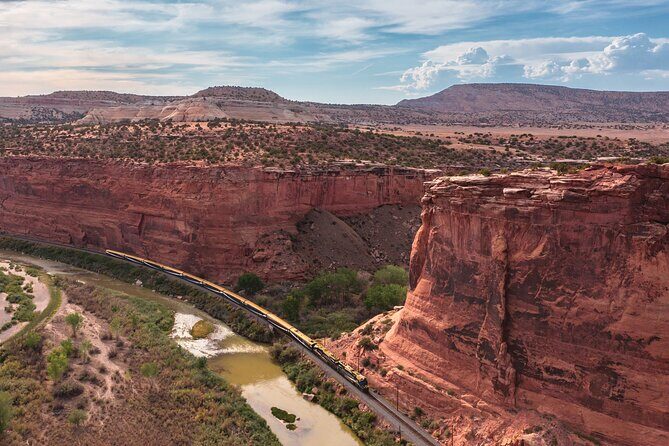
You board in the afternoon in Moab at the Rocky Mountaineer Moab Guest Centre. The meeting point details come in your final documents, but the timing is set: boarding starts around 2:00 pm.
From there, the best part is that you don’t have to pick a single park. Day 1 is built like a geology lesson you can watch from your seat.
Arches National Park (train passes, best seen from the window)
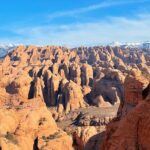
As you head east, the train passes by the Arches area. You’ll catch red rock formations and, in the distance, the La Sal Mountains. Arches is home to more than 2,000 arches, including Landscape Arch, with a light span of about 306 feet (93 meters).
You won’t stop here, but that’s the point. The views keep changing at rail speed, so you get multiple angles without the “one-and-done” problem you get with driving.
Thompson Springs and Cisco: ghost town history at moving speed
You’ll pass Thompson Springs, one of the few ghost towns left, with very few remaining buildings. Nearby is the Thompson Wash Rock Art District, listed on the National Register of Historic Places and known for petroglyphs and pictographs from early Native Americans.
Then you’ll pass Cisco, another once-thriving railroad stop that declined after the Interstate 70 era and steam locomotive changes. A fun detail: this ghost-town look is tied to the movie Thelma and Louise, which helps you recognize the “how did this place vanish?” feeling.
These segments don’t need a stop to land. The train motion makes the history feel like a curtain you’re watching pull back—place, purpose, and disappearance.
Ruby Canyon: the Utah I Colorado marking
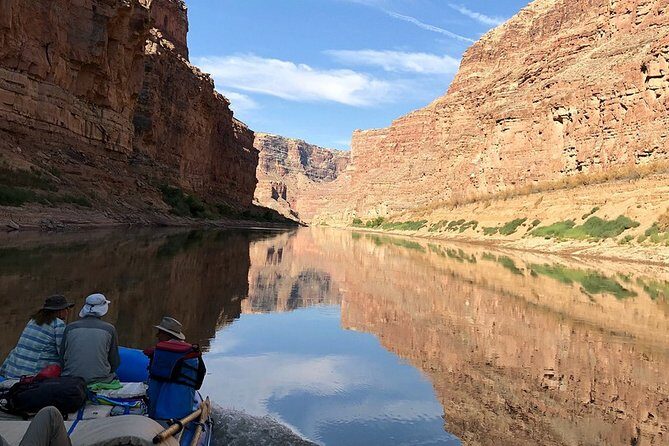
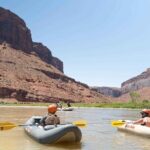
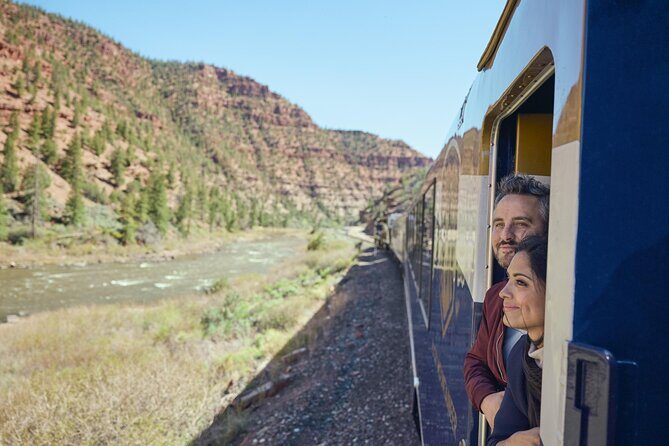
As you move along the Colorado River corridor, you’ll pass through the 25-mile (40-kilometer) Ruby Canyon stretch. This section is popular for rafting, and the canyon walls hold that memorable border text: Utah I Colorado.
Again, you’re not stopping. But rail gives you the chance to read the canyon layers as they unfold, especially when the light hits the sandstone.
Fruita, dinosaur finds, and Mike the Headless Chicken
The train also passes Fruita, known for dinosaur fossils. It’s also famous for “Mike the Headless Chicken,” and the town hosts a festival every May in his memory.
This is one of those spots where the train doesn’t just show scenery—it shows how people live with local quirks. It’s a good reminder that the West isn’t only mountains and empty space. It’s communities with stories.
Grand Junction, Palisade peaches, and wine country cliffs
You’ll pass Grand Junction, built at the confluence of the Gunnison and Grand rivers (the river called the Colorado there in earlier naming). It’s also been a major fruit-growing area since the 1880s.
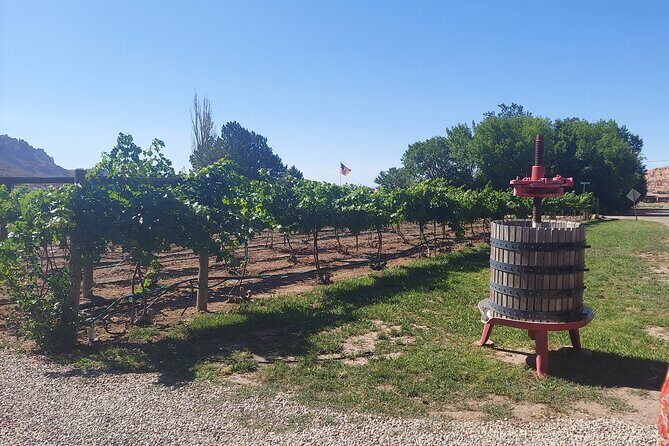
Then you move through Palisade, known for its steep cliffs and the Palisade peaches, plus it being Colorado’s first wine region. Nearby, Mount Garfield rises above town, and the wider Book Cliffs stretch a long distance east to west.
If you like having “region context” while you travel, Day 1 does that well. You get geography, then you get how those landscapes turn into fruit, wine, and towns.
New Castle: river life and wildlife possibilities
Finally, you pass New Castle, where the Colorado River flows through town and the area is popular for trout fishing, rafting, and kayaking. The surrounding mountainous terrain can host deer, elk, black bears, and mountain lions, which is a nice reality check that this is living habitat—not just a postcard backdrop.
Dinner and onboard downtime
Your onboard dining on Day 1 is designed for ease. You’ll enjoy a locally-inspired dinner, snacks, and complimentary beverages while the train keeps rolling. For a lot of people, this is where the trip starts to feel like a vacation instead of a long ride.
Glenwood Springs overnight: why the stop is worth it
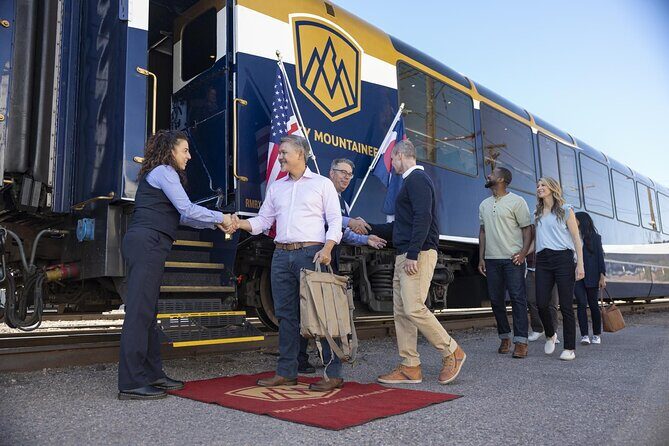
In the evening, you arrive in Glenwood Springs. You disembark and then you’re done with train mode for the night—hotel time kicks in.
You can also choose to soak in the Glenwood Springs Hot Springs. If your hotel is within walking distance, great. If not, a complimentary motorcoach transfer is available, and a Rocky Mountaineer representative will share pick-up details for the next morning.
I like this midpoint because it breaks the “two days of everything blur together” problem. You get a proper night, a reset, and then you’re back onboard the next morning with fresh eyes for the second half of the route.
Day 2: Glenwood Canyon to Denver, with canyons you can feel
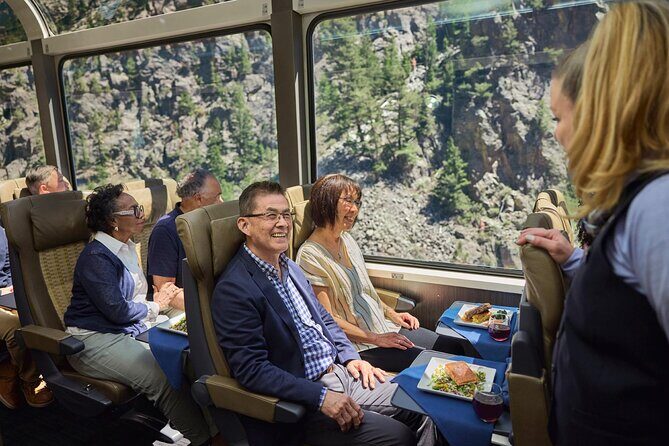
Day 2 starts with departure from Glenwood Springs. You’ll have a two-course hot breakfast onboard with locally sourced ingredients. After breakfast, the train heads through mountain vistas and desert cliffs.
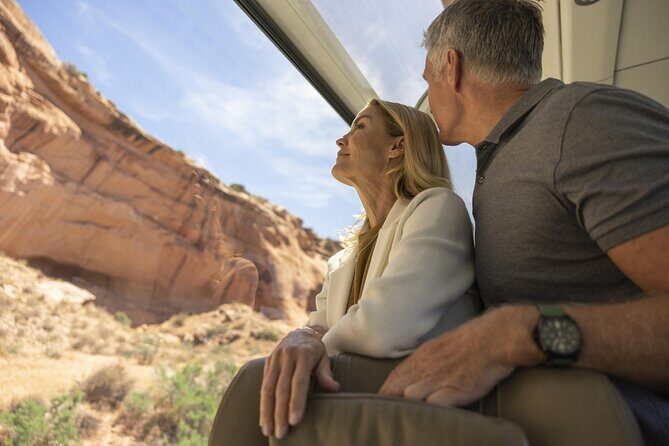
This is one of the routes where the rail windows start to feel like a slow-moving film screen: you’re not just watching scenery; you’re watching layers—canyon shape, river bends, and the way the grade climbs toward the Continental Divide.
Glenwood Canyon: the big wow stretch
As you leave town, you enter Glenwood Canyon, described as the largest in Upper Colorado and one of the most scenic natural features in the United States.
Even without a stop, Glenwood Canyon shows you why trains were built for travel through otherwise hard country. The river corridor channels the route, and the canyon walls give you the “how is the train in there?” feeling.
Gore Canyon: tall walls and serious rafting rapids
Next up is Gore Canyon, with over 1,000-foot cliffs and a dramatic drop. In Upper Gore Canyon, the elevation drops about 300 feet to the Colorado River over roughly 3 miles.
It’s also known for some intense whitewater rafting—Class 4 and 5 rapids with names like Fisherman’s Nightmare and Applesauce. You might not see rafters all the time, but you’ll feel the river’s reputation as the train runs through.
Byers Canyon and wildlife chances
You continue through rugged canyon country, including Byers Canyon. Wildlife is possible here, so keep an eye out when the train rounds turns or slows slightly for any track movement. (You won’t always spot animals, but this kind of terrain actually gives you a chance.)
Along the Colorado River: watching history and modern recreation
Most of the journey follows the Colorado River. You’ll likely see rafters at times, and yes, you may witness a playful “hi” from people on the river—because some rafters treat the passing train as part of their day.
It’s one of those small human details that makes the long ride feel less mechanical and more shared.
Winter Park and the Moffat Tunnel: rail engineering highlights
As you approach Winter Park, you’re looking at Denver’s mountain playground. Skiing here began in January 1940, linked to access from the Denver & Rio Grande Western Railroad Ski Train known as the Winter Park Express. The area gets about 300 inches (762 cm) of snow annually and has around 3,000 acres (1,214 hectares) of ski terrain.
Then the train travels through the Moffat Tunnel, cutting through about 6.2 miles of mountainous terrain as it crosses the Continental Divide. This is the kind of moment where you stop thinking about photos and start thinking about engineers and the reasons railroads mattered here.
Boulder and the Flatirons: where mountains meet plains
As the train gains elevation, you may catch views of Gross Reservoir Dam. The reservoir supplies water to Denver and the agricultural Great Plains.
Then you get a glimpse of Boulder below. Boulder is known for breweries, food, and outdoor activity, and the Flatirons are remnants of older mountains eroded into an inland sea. You also get a sense of the transition: Rocky Mountains meeting the plains.
Big 10 Curve: the railroad-friendly grades
Later, you’ll pass the Big 10 Curve, tight 10-degree radius curves designed to keep the grade at about 2%. It’s not just a fun rail trivia moment—it explains how railroads handle terrain where roads would need switchbacks and steep grades.
This is also where the ride can feel smoother than you’d expect, because the track design is literally working for you.
The Denver arrival: RiNo art energy and an easy finish
You’ll end in Denver after your rail journey. A motorcoach transfer will take you through River North Art District, locally known as RiNo. This area is known for creative businesses and colorful street art murals, including signage and rhino imagery.
Finally, you arrive at Denver Union Station. From there, you’re free for the evening. One easy suggestion: check out the Lower Downtown Historic District for live music and local food.
This ending matters. After two days of window time and canyon emotion, you want a simple place to land—walkable energy, not another complicated timed plan.
What I’d do to get the best experience
Here’s how I’d set you up for success without overthinking it:
- Bring layers. Even with AC on board, canyon changes can make it feel cooler at times.
- Plan your day-two viewing spots mentally. The lounge car can be your “moving observation platform,” while your seat is your “read the details” platform.
- Know what to watch for: the border story in Ruby Canyon, the canyon scale in Glenwood and Gore, and the engineering moments like Moffat Tunnel and Big 10 Curve.
- If you have dietary needs, communicate them. Past riders have praised staff for handling needs like alternative meal options for diabetes.
This train works best when you treat it like an observation experience, not a checklist.
Value check: is $2,327 per person worth it?
At $2,327 per person for a roughly two-day run, you’re paying for three things at once:
- Rail-only access through dramatic terrain you can’t easily replicate by car
- Full service onboard—meals, drinks, Hosts, and restroom availability
- Less friction than driving: complimentary baggage transfers to and from the midpoint hotel plus motorcoach transfers to the departure area
If you were planning to drive, you’d still spend time on the road, pay for lodging in more places, and spend hours bouncing between scenic pull-offs. Here, you trade that for a managed schedule and a comfortable ride.
Is it expensive? Yes. But the value is in the package. You’re not only paying for views; you’re paying for convenience, comfort, and time that’s protected from logistics.
If you tend to travel on a strict budget, you’ll likely feel the price. If you prefer fewer decisions and more “let it happen,” this is the kind of trip that earns its cost.
Should you book this Moab to Denver rail trip?
Book it if you want:
- Big scenery with minimal driving
- A comfortable, service-forward two-day format with an overnight reset in Glenwood Springs
- SilverLeaf Plus perks like lounge space and premium drinks
- A route that mixes geology with real West history—ghost towns, river corridors, and railroad-era engineering
Skip it (or at least think twice) if:
- You hate any motorcoach/shuttle segments before/after the train
- You’re expecting scheduled stops at every sight (this route largely passes through many iconic spots)
- You want lots of time off-train for hiking or wandering
If you’re deciding between rail comfort and road flexibility, this trip leans hard into rail. That’s not a problem—it’s the whole point.
FAQ
How long is the Rockies to the Red Rocks train trip from Moab to Denver?
It’s listed as about 2 days (approx.).
Where is the overnight stop on this itinerary?
The overnight stay is in Glenwood Springs, Colorado.
What meals are included onboard?
Meals included are lunch, dinner, and a two-course hot breakfast. Snacks and complimentary beverages are also part of the onboard experience.
What extra does SilverLeaf Plus include?
SilverLeaf Plus includes exclusive access to the lounge car, additional space to relax, a small outdoor viewing area, and premium alcoholic beverages with signature cocktails.
Is WiFi available on board?
WiFi on board is not included.
How many travelers are in the group?
The maximum group size is 15 travelers.
How does luggage handling work?
Luggage handling to and from the midpoint accommodations is included. The rail journey also includes complimentary luggage check-in and transfers, with guidelines of up to two pieces per person and a total of 30 kg/60 lbs per person (with no more than 23 kg/50 lbs per piece).
Where does the trip start and where does it end?
It starts at 59 S Main St, suite 3, Moab, UT 84532 (Rocky Mountaineer Moab Guest Centre) and ends at Denver Union Station at 1701 Wynkoop St, Denver, CO 80202.
What happens if it’s canceled due to poor weather?
If it’s canceled due to poor weather, you’ll be offered a different date or a full refund.