REVIEW · MOAB
Moab Canyoneering Experience
Book on Viator →Operated by Red River Adventures · Bookable on Viator
Two rappels. One jaw-dropping arch. This half-day Moab canyoneering trip takes you through water-carved sandstone and sets you up for a Morning Glory Arch sight you can actually stand close to, with guides who teach you how to rappel and keep every drop backed up by a separate safety system. I especially like the hands-on coaching for first-timers and the small-group feel (max 12) that helps you get real attention when you need it.
One thing to consider: it’s physically active, and it starts early. You’ll need moderate fitness for the hike sections and you should be ready for the 7:30 am start, plus the tour requires good weather to run.
In This Review
- Key Highlights at a Glance
- Slot Canyon Rappels in Moab: What You’re Really Signing Up For
- Meeting at 1140 S Main St: The Early Start That Changes Everything
- The 3-Mile Route: Petrified Dunes, Two Drops, and a River Stream
- Two Rappels, One Safety System Philosophy
- Morning Glory Arch From the Edge: Why This View Hits
- The Hike Back Out: A Pretty Ending to the Technical Part
- Gear and Comfort: Pack for Ropes and Sand
- Guides Matter: Patient Coaching and Real-World Training
- Who This Is For (And Who Might Want a Different Day)
- Price and Value: Is $170 Worth It?
- Weather Is the Real Boss Here
- Should You Book This Moab Canyoneering Tour?
- FAQ
- What time does the Moab canyoneering tour start?
- How long is the experience?
- Do I need any previous canyoneering or rappelling experience?
- How many rappels will I do, and how high are they?
- What equipment is included?
- What is the minimum age to participate?
- What is the group size limit?
- Is the tour dependent on weather?
Key Highlights at a Glance
- Two free-hanging rappels: 90 feet and 120 feet into the canyon system
- Morning Glory Arch viewing: up-close from your second rappel station
- Safety built in: guides back each rappel with a separate safety system
- No experience required: helmets and coaching make this doable for many first-timers
- Small group max 12: you’re not lost in a big herd during the tricky parts
Slot Canyon Rappels in Moab: What You’re Really Signing Up For
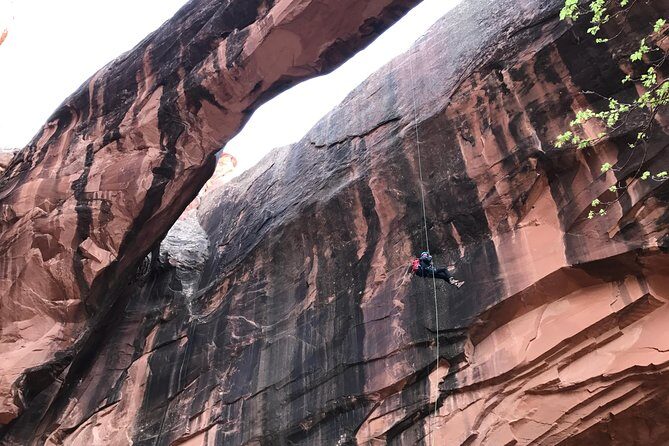
If you’ve been to Moab and thought, sure, I’ll look at canyons from the road, this is the switch to hands-on terrain. The core experience is straightforward: you hike into a slot-canyon setup, then you rappel down into sandstone chambers, including a big view stop at Morning Glory Arch.
What makes this option feel worthwhile is that it’s not just “gear up and hope.” You’re taught rappel basics, fitted with safety equipment, and guided through both the first and second drop with backup safety in place. That difference matters because canyon time isn’t the moment to learn what your body needs to do. Here, the learning happens before you hang over the edge.
The route is about 3 miles total, spread across a half-day rhythm. You also get a payoff on the way back out: a downhill walk to a spring-fed Colorado River stream, plus some talk about plants, geology, wildlife, and local history.
Other canyoneering and rappelling tours we've reviewed in Moab
Meeting at 1140 S Main St: The Early Start That Changes Everything
The tour meets at 1140 S Main St in central Moab, with a start time of 7:30 am. That early departure isn’t random. Canyoneering feels better when temperatures are cooler and the canyon air is calmer, and it gives you a full morning to enjoy the activity without turning your whole day into one long scramble.
You’ll return to the meeting point at the end, so you’re not dealing with complicated end-of-tour logistics. The experience also uses a mobile ticket, and you’ll get confirmation at booking, which keeps the morning routine simple.
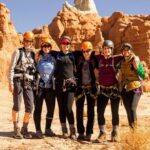
Group size is capped at 12. That’s a practical number for canyoneering. It means the guide can check gear, give clear instructions, and still keep things moving. In a smaller group, you’ll also spend less time waiting around and more time actually doing the fun parts.
The 3-Mile Route: Petrified Dunes, Two Drops, and a River Stream
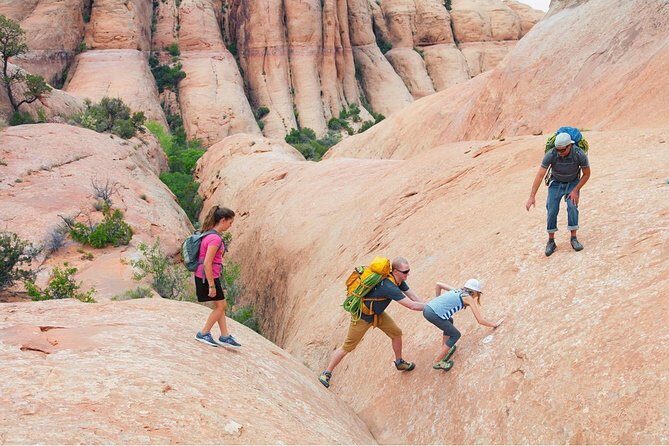
Here’s the flow, in plain language, so you can picture your day.
First comes a short hike across petrified sand dunes. It’s not the main show, but it sets the tone: you’re in a desert setting, moving over dry, textured ground, building momentum before the rappel portion.
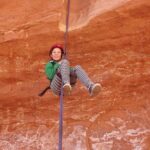
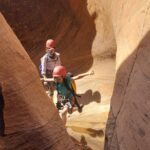
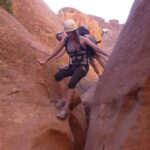
Then you move to the first rappel. You’ll make a 90-foot (27-meter) drop into a water-carved sandstone chamber. From there, the canyon narrows through a small slot. This is one of those “you can’t get this from a viewpoint” moments because you’re inside the rock, not just looking at it.
Next comes the second rappel: a free-hanging 120-foot (37-meter) descent. This is the moment that brings you closest to the Morning Glory Arch. The arch is listed as 243 feet (74 meters) long, and your rappel station is close enough that you don’t just hear about it, you see it as a real structure in front of you.
After the rappels, it’s downhill to a spring-fed stream on the Colorado River. You’ll learn a bit about what you’re seeing—plants, geology, wildlife, and the area’s history—before heading back to where you started.
Two Rappels, One Safety System Philosophy
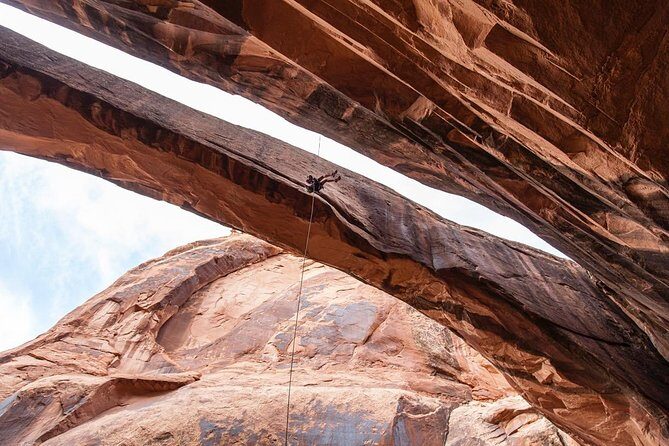
Canyoneering has one universal stress point: the jump from standing on solid ground to committing to a rope. This tour is built to reduce that stress.
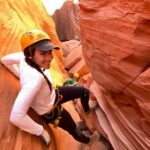
You’ll be equipped with a helmet and other safety gear, including rappelling gloves and a harness. Then your guide demonstrates techniques and walks you through what to expect. The big reassurance here is that your guide backs up each rappel on a separate safety system. That means you’re not relying on just one line and one moment.
This is especially important for first-timers. A lot of the fear comes from uncertainty: Will I remember what to do? Will I freeze? Here, you get coaching and then the guide is watching your setup so you can focus on the next step.
If you’re the type who worries about heights, know this: the ropes are real, and the drops are real. But your job is still a guided one, not a solo decision made at the lip. With that structure, the experience can feel more like supervised training with rewards than like a cliffside gamble.
Morning Glory Arch From the Edge: Why This View Hits
Morning Glory Arch is one of those landmarks that sounds like a photo subject until you’re actually in the right place. The reason this tour is popular is simple: your route and the second rappel station put you close enough to see scale and shape from a vantage you can’t easily replicate on foot.
Your second rappel gives you an up-close view of the arch. That’s the payoff for the work. You get to connect the “name” to the physical reality—how the arch frames the canyon, how it sits relative to the sandstone chambers around it, and how the water-carved setting creates the whole scene.
What I like about this approach is that the view isn’t tacked on like a souvenir stop. It’s integrated into the activity. You’re already there doing something dramatic, so the arch becomes part of the moment rather than a quick look-and-run.
And yes, you might get a little emotional. It’s hard not to when you’re standing on a harness system, looking at a big geological feature you used to only see from far away.
The Hike Back Out: A Pretty Ending to the Technical Part
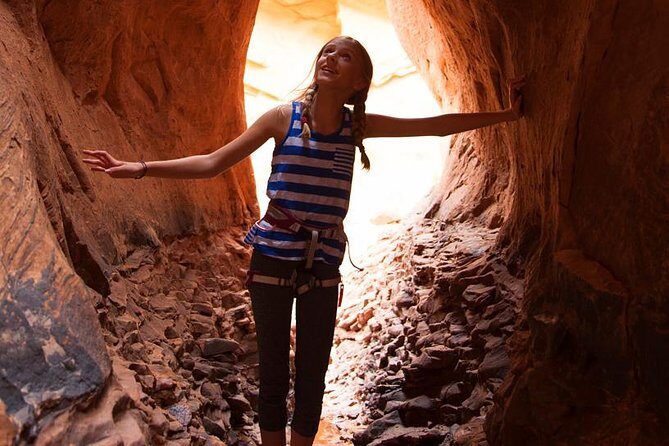
After the second rappel, you’ll head downhill to a spring-fed stream on the Colorado River. This is where your body gets a break from the technical rope work. It’s also where the scenery can feel refreshingly different: from sandstone chambers and slots to flowing water and the life around it.
You’ll get a short education piece while you’re moving. Expect explanations tied to what you can actually see, including plants, geology, wildlife, and local history. It’s the kind of talk that makes the desert feel less random because you’re pairing facts with immediate visuals.
This part also helps the tour feel complete. You don’t just go down and then return the same way. You’re building a full arc: approach, rappel, view, then a return through a more nature-centered section.
Gear and Comfort: Pack for Ropes and Sand
This tour supplies the critical safety gear: harness, helmet, rappelling gloves, and you may get day packs when needed. That takes away a lot of uncertainty. You don’t have to show up wondering if you brought the right harness or gloves.
What you still need to think about is comfort for desert hiking and time in gear. You’ll be walking across petrified sand dunes and then moving through uneven canyon terrain. Wear footwear that can handle grip on rocky surfaces. Dress for desert mornings, which can feel cool at 7:30 am and then warm up as the half-day progresses.
Also consider that you’ll spend time in safety equipment that changes how you move. Clothing should be something you can move in without constant fussing. You’ll feel better when you treat this like an active hike day with technical stations, not a stroll.
If you’re doing this with family, the best strategy is simple: keep the clothing plan boring and functional. Let the guides handle the excitement. You just focus on staying comfortable enough to listen and follow directions.
Guides Matter: Patient Coaching and Real-World Training
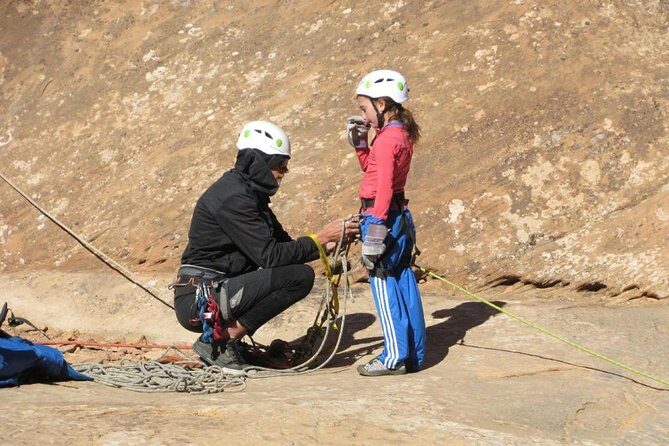
This is one of those experiences where the guide can make or break the day. The repeated theme in the experience style here is calm, patient instruction and real confidence during technical moments.
Guides you may meet include Cage, Kensley, Adam, Emily, Brian, Hunter, and Hanna. Across these names, the consistent vibe is clear communication and step-by-step help. That shows up especially for people doing canyoneering for the first time.
Another reassuring factor: at least one of the guides is described as having EMT training. You don’t need that skill on a normal day, but it’s comforting to know the company takes safety training seriously.
In practice, you’ll feel guide attention most during the rappels—when the guide checks your setup, demonstrates techniques, and provides that separate safety backup. When the guide keeps things orderly, the technical part becomes manageable and even fun.
Who This Is For (And Who Might Want a Different Day)
This tour asks for moderate physical fitness. That means you should be able to hike, handle uneven ground, and manage your body while wearing a harness and helmet. You don’t need technical experience, but you do need willingness and basic stamina.
Children must be 8 years or older. The tour also works across ages, which is a good sign that the guiding style supports a wide range of comfort levels. If you’re bringing kids, pay attention to their excitement level about heights. The coaching helps, but canyon drops are still canyon drops.
This is a good fit if you want Moab that goes past viewpoints. If you like hands-on activities—especially ones with clear instruction—this will likely feel like a highlight.
It might not be your best match if you’re strongly height-averse or if you’re dealing with injuries that make rope work or uneven hiking tough. Since the day is short but physical, you want your body to cooperate.
Price and Value: Is $170 Worth It?
At $170 per person for an approximately 4-hour guided experience, the price sits in the “worth it if you’re doing it once right” category. Here’s why I think it’s a fair number.
You’re paying for:
- Two major rappels with real rope systems
- A guide who equips you with harness, helmet, and rappelling gloves
- Technical instruction and demonstrations
- Backup safety systems for each rappel
- A small-group setup (max 12)
- Local expertise on plants, geology, wildlife, and history
If you were to compare this against buying your own gear and trying to plan your own rappel route in the desert, the guided structure becomes the value. You’re not just buying access. You’re buying training, equipment, and safety management from start to finish.
Also, this is a popular activity in Moab, booked about 50 days in advance on average. That usually means demand is high and schedules fill. If you want it in your dates, plan ahead.
Weather Is the Real Boss Here
Canyoneering depends on conditions, and this one requires good weather. That’s not a minor note. In a slot canyon activity, rain and slick surfaces can quickly change the risk picture.
If the tour can’t run due to weather, you’ll be offered another date or a full refund. Practically, that means you should keep your schedule flexible enough to handle a reschedule. Moab mornings can be sunny, but the Southwest can still surprise you.
If you’re traveling with a tight itinerary, it’s smart to choose a date where you can wait a day or swap plans if weather forces a change.
Should You Book This Moab Canyoneering Tour?
I’d book it if you want a half-day that gives you both adrenaline and a real sense of place. The combination of two big rappels, the up-close Morning Glory Arch stop, and guide-led instruction makes it feel like a complete canyoneering introduction rather than a brief taste.
You should also book if you like the idea of a small group and clear safety systems. The separate backup setup and patient coaching are the big reasons first-timers tend to come away feeling proud instead of shaken.
Skip or reconsider if you can’t handle moderate physical effort, you’re not comfortable with heights, or you’re trying to squeeze the tour into a schedule with zero flexibility for weather.
If your goal is to experience Moab’s canyons from the inside—rope in hand, eyes on the arch, and your questions answered step by step—this is one of the most practical ways to do it.
FAQ
What time does the Moab canyoneering tour start?
The tour starts at 7:30 am and meets at 1140 S Main St, Moab, UT 84532.
How long is the experience?
It lasts about 4 hours.
Do I need any previous canyoneering or rappelling experience?
No experience is necessary. The guide equips you and demonstrates rappel techniques.
How many rappels will I do, and how high are they?
You’ll do two rappels: a 90-foot (27-meter) drop and a 120-foot (37-meter) free-hanging rappel.
What equipment is included?
Harness, helmet, and rappelling gloves are included, along with use of a day pack when needed.
What is the minimum age to participate?
Children must be 8 years or older to join.
What is the group size limit?
The maximum group size is 12 travelers.
Is the tour dependent on weather?
Yes. The tour requires good weather, and if it’s canceled due to poor weather you’ll be offered a different date or a full refund.