REVIEW · MOAB
Moab: Canyon Country Sunset Helicopter Tour
Book on GetYourGuide →Operated by Pinnacle Helicopters · Bookable on GetYourGuide
Sunset from a helicopter changes everything. I love the magic-hour canyon colors and the way you’re shown iconic arches and red-rock landmarks with real, hands-on pilot guidance, not just a quick flyby. This is the kind of outing where Canyon Country feels quiet in a way you can’t get from a parking lot, and where the view keeps getting better as the light slides across the cliffs.
One catch: the flight can be rescheduled or cancelled due to weather, so this works best when you can keep some flexibility in your plans.
In This Review
- Key Highlights You’ll Care About
- Why Canyon Country at Sunset Feels Like a Different World
- The 60-Minute Plan: How the Time Adds Up
- Dead Horse Point and the Colorado River: Big Shapes, Clear Scale
- Corona Arch and the Red-Rock Feature Hunt You Can’t Recreate on Foot
- Potash Ponds at Sunset: The One-Scene Color Moment
- The Pilot/Guide Factor: Spencer and Tracy Set the Tone
- Price and Value: What You’re Really Paying For at $788
- Who This Tour Fits Best (and Who Should Skip It)
- Getting There: Canyonlands Field Airport and What to Expect
- Should You Book This Moab Canyon Country Sunset Helicopter Tour?
- FAQ
- How long is the Moab Canyon Country sunset helicopter tour?
- What sights will we see during the flight?
- How many people are in the group?
- Is hotel pickup or drop-off included?
- Where do I meet the tour?
- Is the tour wheelchair accessible?
- Is there a weight limit?
Key Highlights You’ll Care About
- Dead Horse Point + the Colorado River in one satisfying aerial sweep
- Corona Arch and a cluster of famous arches you’d miss on foot
- Small group (up to 3 people) for more space and easier questions
- Close, detailed routing that keeps the scenery feeling right there with you
- Potash Ponds at sunset for that mirror-like color glow
- A live English-speaking pilot/guide who points out dozens of rock features
Why Canyon Country at Sunset Feels Like a Different World
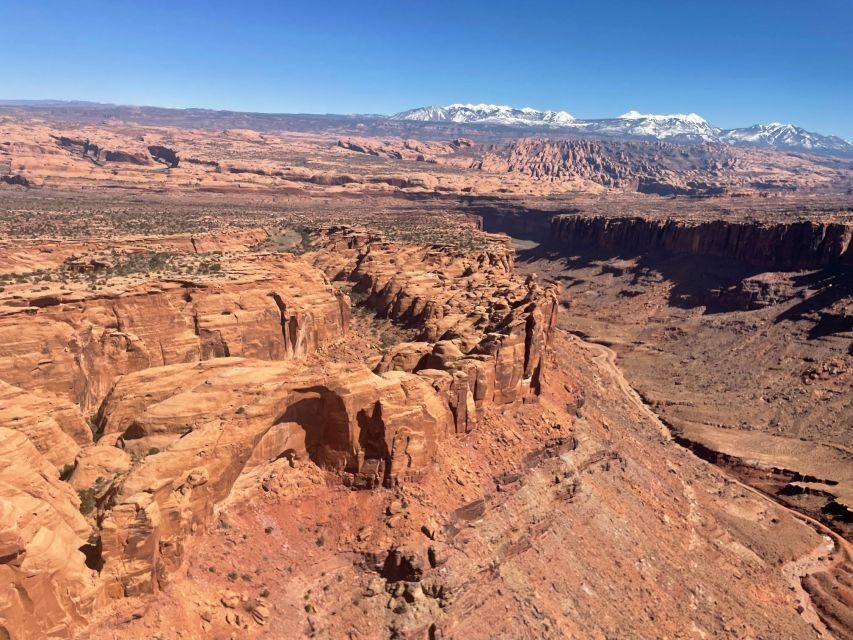
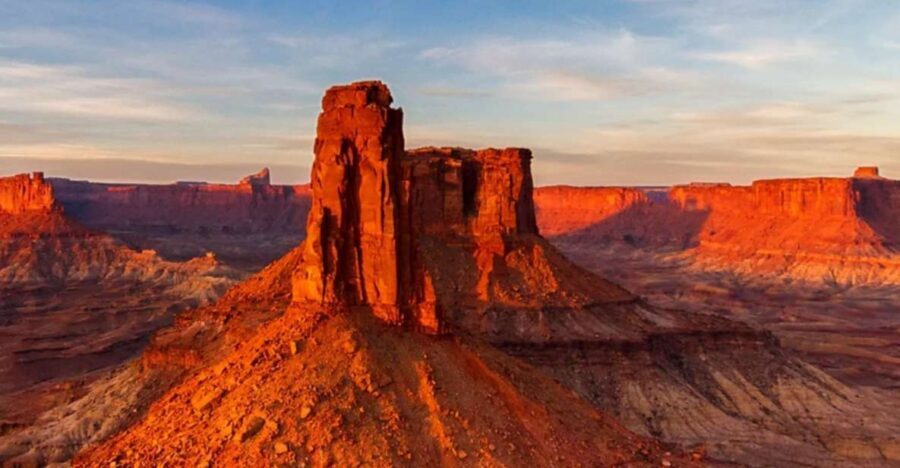
If you’ve only seen Canyonlands from viewpoints, you already know the cliffs look dramatic. From the air at sunset, it gets personal fast. The light turns the whole region into layers—red, orange, then golden—plus sharp shadows that stretch across the valley like someone pulled a dramatic lighting switch. That change happens in minutes, and that’s exactly why timing matters here.
I like that this tour is built around magic hour and not just “sometime this afternoon.” As the sun drops, the canyon shadows grow and the contrast gets stronger, so the shapes of fins, bridges, and arches look cleaner and more three-dimensional. Add in a route that stays close enough to make you feel the scale, and the scenery starts to look less like a photo background and more like the real set of a sci-fi movie—except it’s very, very Utah.
There’s also a practical reason sunset is the sweet spot: you don’t have to choose between viewpoints. You get multiple famous sights in one outing, plus the quiet payoff of flying rather than driving and hiking. You spend your time looking up, not planning your next pull-off.
Other scenic flights and airplane tours we've reviewed in Moab
The 60-Minute Plan: How the Time Adds Up
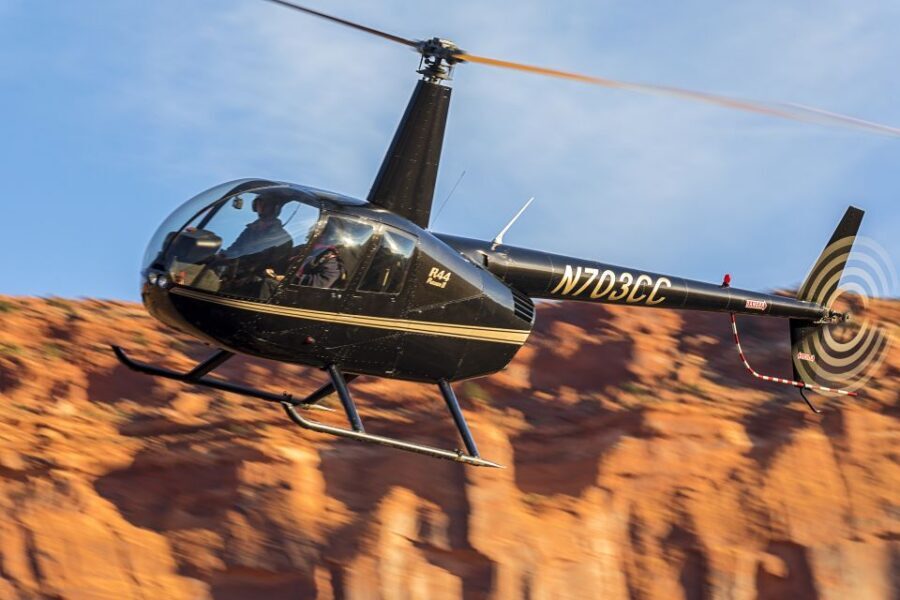
This is a 1-hour experience that includes a 45-minute helicopter ride. In other words, you’re not just paying for “some time in the air.” You’re paying for a structured window designed for sunset timing, with time to fly to and from the area and still enjoy the best light.
The tour also covers every iconic view you’d expect from a classic 45-minute Island in the Sky flight, then extends beyond that with additional red-rock sights you only really notice when you have extra air time. What makes that matter for you is simple: arch country is huge, and the difference between a quick pass and an extended route is whether you get to process what you’re seeing. With this format, there’s more time for the pilot to point out features and for you to look longer instead of just react.
One more detail to know: helicopters may not be allowed to cross into Canyonlands National Park airspace. That doesn’t mean you’ll be stuck with boring distance. It means you’re viewing the park from where the flight path allows—still close enough for jaw-dropping angles, but it also explains why your route might feel like it’s skimming the edges of the action rather than going straight “over the middle” of the park.
Dead Horse Point and the Colorado River: Big Shapes, Clear Scale
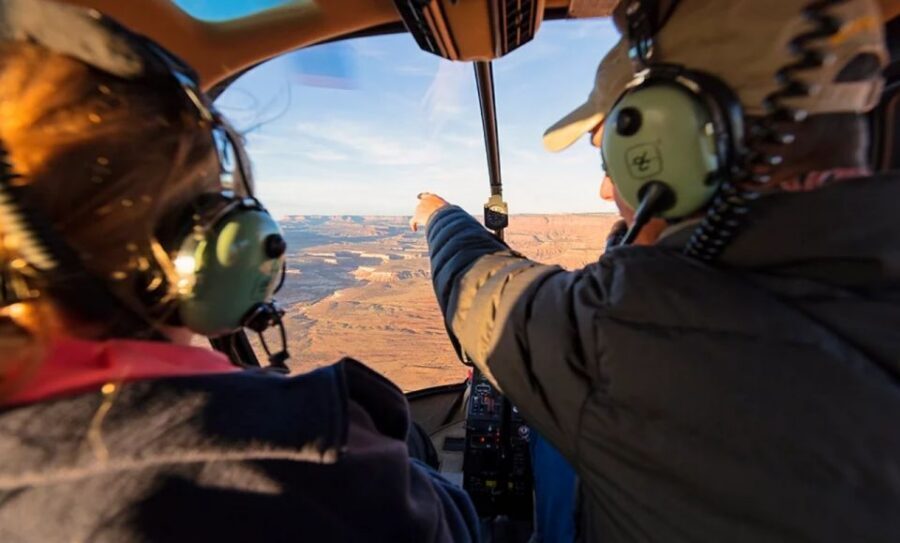
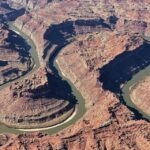
Dead Horse Point is one of those places where the ground-level experience is impressive—then the aerial view makes it feel even larger. From the air, you can see how the cliff line cuts the terrain and how the canyon system organizes itself. The point becomes a kind of visual table: everything drops away, and the river corridor turns into a guiding line through the maze of rock.
Then there’s the Colorado River connection. On the ground, it can be hard to understand how the river carved the region. In the air, the river reads like the main story, and everything else—arches, canyons, bridges—feels like supporting characters. You get a better sense of direction and spacing, so the famous landmarks stop feeling random.
What I like about this part of the flight is that it gives you your “map.” Once you understand where the river and major cliff edges sit, the later arch sightings land with more impact. You’re not just spotting names—you’re tracking how the land fits together.
Corona Arch and the Red-Rock Feature Hunt You Can’t Recreate on Foot
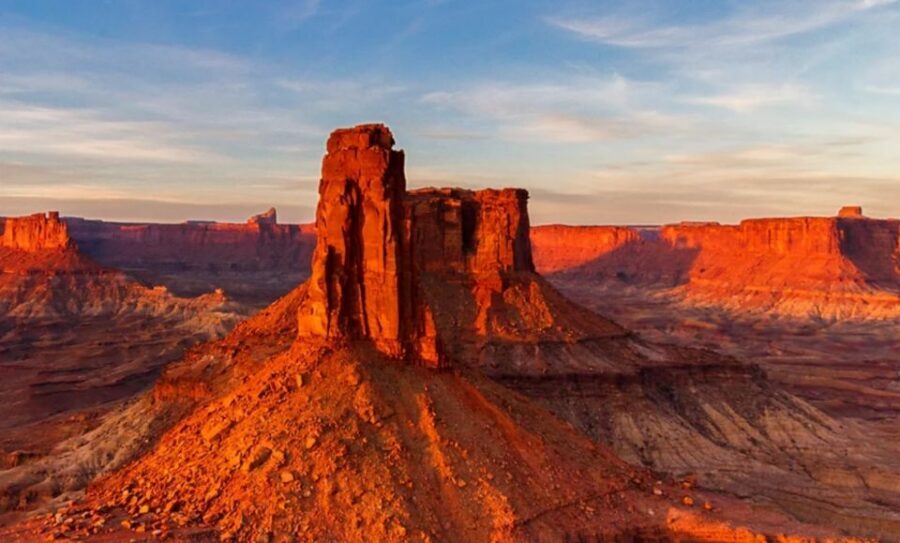
Here’s where the tour becomes special. You’re not only taking in famous areas—you’re being guided to famous rock forms and seeing what they look like when they’re framed by canyon walls and shadow lines.
Corona Arch is the headliner, but you’ll also get views of several other named features, including:
- Pritchett Arch
- Halls Bridge
- Funnel Arch
- Kane Creek Canyon
- Behind the Rocks
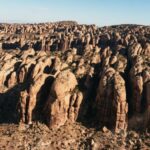
If you’ve ever hiked toward a formation and wondered, Where’s the best angle?—this is the fix. From the air, you can see how arches connect to surrounding strata, how bridges span openings, and how narrow a passage can be when viewed from above. It also makes it easier to understand why these structures look the way they do: the whole region is shaped by erosion patterns, and the aerial view shows those patterns quickly.
The best part is the way the pilot frames it. The tour description says your pilot points out dozens of famous rock features hiding in plain sight. In real-world terms, that means you’ll leave feeling like you “learned the land,” not just photographed it. And in the reviews, pilots are singled out for exactly this kind of storytelling and relaxed, question-friendly vibe.
Potash Ponds at Sunset: The One-Scene Color Moment
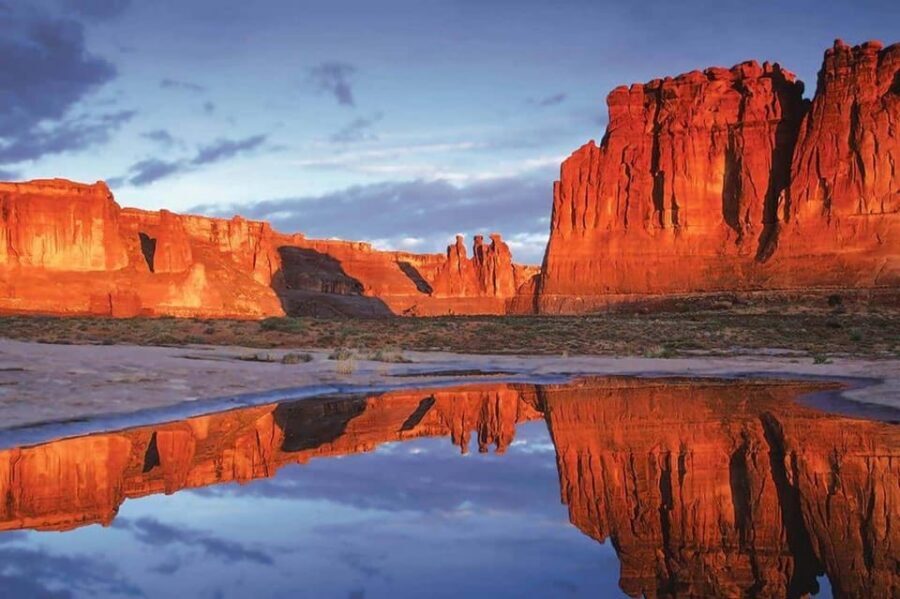
Every canyon flight has big moments, but Potash Ponds is the kind of stop that gives you a different emotional reaction. The ponds can reflect the sunset glow, so color doesn’t just sit on rock—it shimmers across water-like surfaces. When light shifts to orange and gold, the reflections can make the region feel almost unreal.
This matters for you if you like photos—or even just clean visual memories. You’re not only chasing dramatic cliffs. You’re getting a contrast scene: mineral and water-like surfaces catching the light while the canyon country around it remains all texture and shadow.
And because sunset is changing quickly, this tends to be the part where the clock starts to feel dramatic. If you’re the type who watches the sky, you’ll appreciate how the light changes while you’re still in the air, rather than after you’ve landed and moved on.
Other evening experiences in Moab

The Pilot/Guide Factor: Spencer and Tracy Set the Tone
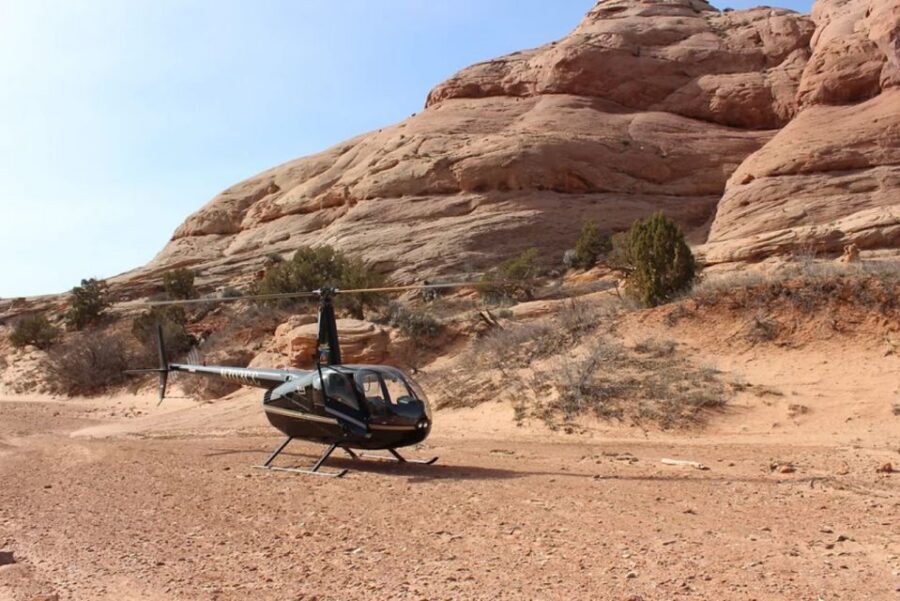
In a helicopter tour, the pilot isn’t just driving the aircraft. They’re the interpreter. And the reviews emphasize that two pilots—Spencer and Tracy—help make this feel personal.
Scott’s review highlights Spencer as informative and relaxed, answering questions and turning the flight into a calm, guided experience. Another review credits Tracy with personalized commentary and a rare mix: skilled piloting plus a genuine passion for the geography you’re flying over. That’s a big deal, because in the air you can’t always identify what you’re seeing instantly. A good guide helps you connect the name to the shape while you still have the best light.
You also get live English commentary during the flight. If English is important to you, this is straightforward: you won’t be stuck with guesswork while the aircraft is already in motion.
Finally, there’s the “seat perspective” point from the reviews: the front seat can offer a wide view, almost like you’re getting a nearly 180-degree view forward. I can’t promise exact sightlines for your specific seat assignment, but if you want maximum scenery per glance, it’s worth asking about which seats offer the best forward view when you check in.
Price and Value: What You’re Really Paying For at $788
At $788 per person, this isn’t a cheap souvenir. The good news is that the pricing makes sense when you break down what’s included and what you can’t easily replace.
You’re paying for:
- A small group setup (limited to 3 participants)
- A 45-minute helicopter ride timed for sunset light
- Access to views tied to iconic Canyonlands landmarks plus extra time for additional arches and feature spotting
- All fees and taxes included in the price
So the value question becomes: would you rather spend that money on a mix of drives, viewpoint stops, and a quick helicopter substitute? If you want one outing that gives you a big range of sights without the friction, this is built for that. It also helps that this is designed for “quiet solitude” in the air—there’s no crowd shuffle, no parking-lot scramble, and no waiting for sunset at a single viewpoint while the rest of the scenery stays unseen.
Is it worth it for everyone? Not automatically. If you’re on a tight budget, you can absolutely enjoy Moab without flying. But if you want the best chance of seeing the region in its full vertical complexity—cliffs, river cuts, arches, and shadow drama—this has a clear logic behind the price.
Who This Tour Fits Best (and Who Should Skip It)
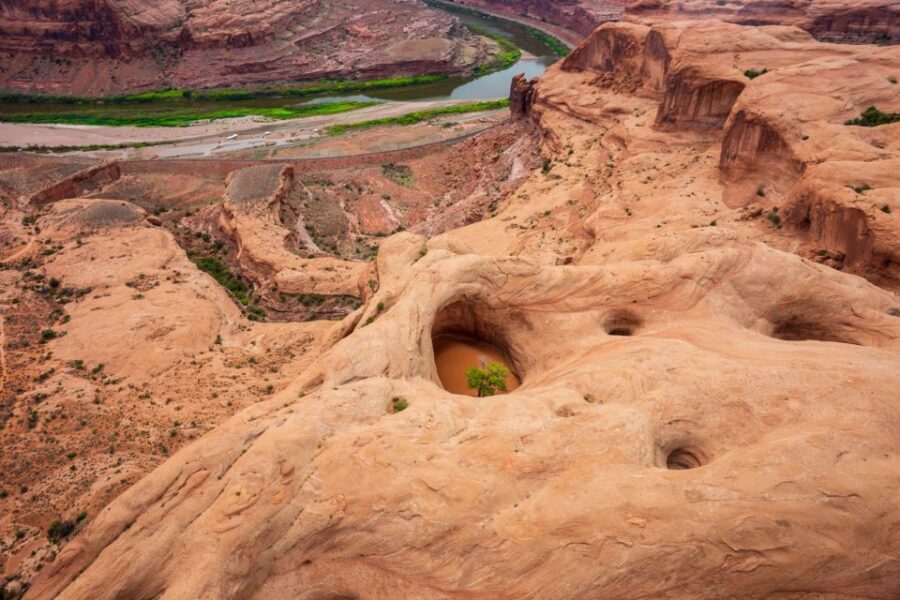
This tour is a strong match if you:
- Want a sunset-focused experience rather than a daytime flight
- Like the idea of a feature-guided route with live commentary
- Prefer a small group setting that keeps the experience calmer and more interactive
- Care about seeing multiple Canyon Country icons in one go
It’s also listed as wheelchair accessible, which is a big plus if you need that option.
One group of people should know the limits. The tour includes weight checks at discreet check-in, with a maximum of 299 pounds (135 kg) per person and 600 pounds total for the three passengers. If you’re over 300 lbs (136 kg), the tour isn’t suitable. That’s not a minor detail—it affects whether you can book and whether your group can fly together.
Getting There: Canyonlands Field Airport and What to Expect
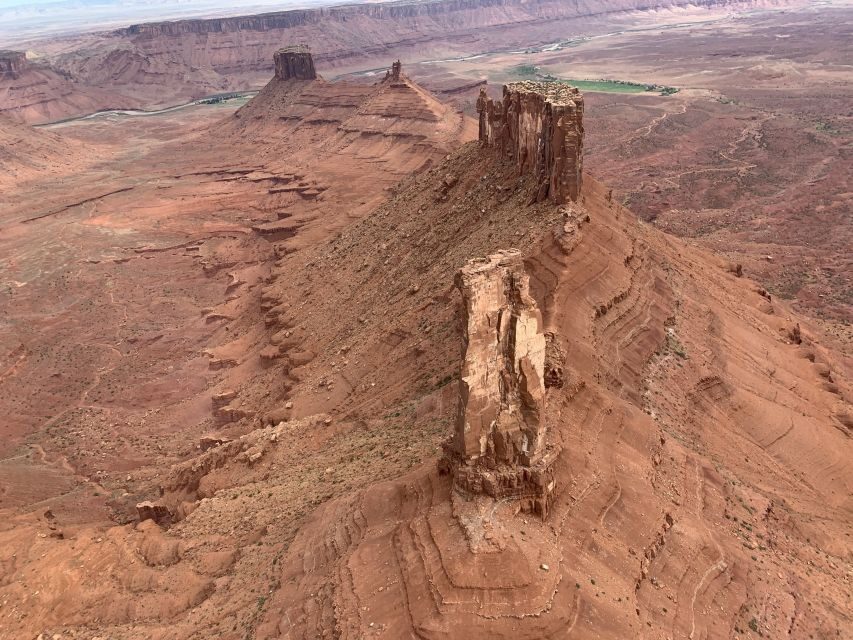
The meeting point is Canyonlands Field Airport. You’ll check in at the local partner’s desk inside the main terminal building. Restrooms are available in the terminal before the flight, and there’s no parking fee required.
Because the check-in process includes passenger weighing, I’d treat this as a “show up with time to spare” situation. The goal isn’t to rush; it’s to keep the process smooth so your flight can run as scheduled.
Also, since hotel pickup or drop-off isn’t included, you’ll be responsible for getting to the airport on your own. If you like to travel light and simple, this is an easy task. If you were hoping for a door-to-door setup, you’ll want to plan your transportation early.
Should You Book This Moab Canyon Country Sunset Helicopter Tour?
Book it if you want the best shot at a classic Moab red-rock experience with a sunset twist and a guided feature tour format. The pitch is simple: multiple iconic sights in one flight, timed for the light that makes arches and canyon shadows look their most dramatic, with a small group feel and pilots who take questions.
Skip it if budget matters more than “seeing the region from a new angle,” or if your schedule can’t flex. Weather is the main wildcard here—poor conditions can lead to rescheduling or cancellation—so if you’re locked into a tight itinerary, be cautious.
If you do book, choose this as a priority experience rather than a “maybe” add-on. This is the kind of outing that pays off because it’s hard to replicate with viewpoints alone.
FAQ
How long is the Moab Canyon Country sunset helicopter tour?
The total experience is listed as 1 hour, including a 45-minute helicopter ride.
What sights will we see during the flight?
You can expect views of Dead Horse Point, the Colorado River, Corona Arch, and additional red-rock features such as Potash Ponds, Pritchett Arch, Halls Bridge, Funnel Arch, Kane Creek Canyon, and Behind the Rocks.
How many people are in the group?
The tour is limited to a small group with a maximum of 3 participants.
Is hotel pickup or drop-off included?
No. Hotel pickup or drop-off is not included.
Where do I meet the tour?
Meet at Canyonlands Field Airport. Check in at the local partner’s desk inside the main terminal building.
Is the tour wheelchair accessible?
Yes, the tour is listed as wheelchair accessible.
Is there a weight limit?
Yes. Individual passenger weight cannot exceed 299 pounds (135 kg) per person, with a combined limit of 600 lbs (272 kg) for all three passengers.